Anonymous
Mar 26, 2026
Rating: 5/5
Perfect for industrial prototyping
Robust build quality and excellent documentation. The dual-core architecture handles multitasking beautifully for our sensor data logging application.
Description
Reviews
| Brand | - |
| Category | Robotics / STEM Teaching Tools / Development, Learning, Evaluation & Industrial Control Boards |
| Origin | - |
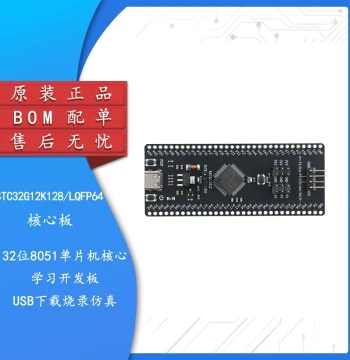
| Processor | RP2350 Dual-Core ARM Cortex-M33 |
| Clock Speed | Up to 150 MHz |
| Flash Memory | 4MB On-board QSPI Flash |
| SRAM | 520KB |
| GPIO Pins | 26 Multi-function GPIO pins |
| Programming Languages | MicroPython, CircuitPython, C, C++ |
| Connectivity | USB 1.1 Device/Host support |
| Power Input | 1.8V to 5.5V DC via VSYS pin |
| Dimensions | 51mm x 21mm |
| Weight | Approx. 4 grams |
Anonymous
Mar 26, 2026
Rating: 5/5
Perfect for industrial prototyping
Robust build quality and excellent documentation. The dual-core architecture handles multitasking beautifully for our sensor data logging application.
Anonymous
Mar 13, 2026
Rating: 4/5
Great learning tool
Easy to get started with Thonny IDE. Only giving 4 stars because some older libraries needed minor updates to work perfectly with the new architecture, but support forums were helpful.
Anonymous
Mar 08, 2026
Rating: 5/5
Significant upgrade from the original Pico
The RP2350 chip offers a noticeable performance boost. I migrated my existing MicroPython projects easily, and the extra RAM allows for more complex logic without hitting memory limits.
Anonymous
Mar 05, 2026
Rating: 4/5
Solid hardware, fast shipping
Board arrived well-packaged and works exactly as described. Power consumption is efficient. Would love to see built-in Wi-Fi in future versions, but for now, it's a great standalone MCU.
Anonymous
Mar 04, 2026
Rating: 5/5
Beginner friendly yet powerful
I am new to embedded systems, and this board made learning C++ and Python very approachable. The community support is vast and welcoming.
Anonymous
Mar 02, 2026
Rating: 5/5
Excellent value for money
For the price point, you cannot beat the specs. The improved floating-point unit makes motor control algorithms run much smoother than on the previous generation.
Q: Is this board compatible with existing Pico W shields?
A: Yes, the Raspberry Pi Pico 2 maintains the same form factor and pinout as the original Pico, so most existing shields and headers are compatible.
Q: What debugger interface does this use?
A: It supports SWD (Serial Wire Debug) via the three test pads on the back of the board, compatible with probes like the Raspberry Pi Debug Probe or J-Link.
Q: Does it support Bluetooth connectivity out of the box?
A: No, the standard Pico 2 does not have built-in Bluetooth or Wi-Fi. You would need to use the 'Pico 2 W' variant or attach an external module via UART/SPI for wireless features.
Q: Can I power this directly from a 3.7V LiPo battery?
A: Absolutely. You can connect a 3.7V LiPo battery to the VSYS pin or the bottom header pins. The onboard regulator handles the voltage conversion safely.
Q: Is the flash memory user-upgradeable?
A: The 4MB flash is soldered onto the board and is not designed to be replaced by end-users. However, it is sufficiently large for most application code and data storage needs.