Anonymous
Mar 27, 2026
Rating: 5/5
Great for learning ARM
Bought this for my university embedded systems course. It handles all the labs perfectly, from basic GPIO toggling to PWM motor control. Highly recommended for students.
Description
Reviews
| Brand | - |
| Category | Robotics / STEM Teaching Tools / Development, Learning, Evaluation & Industrial Control Boards |
| Origin | - |
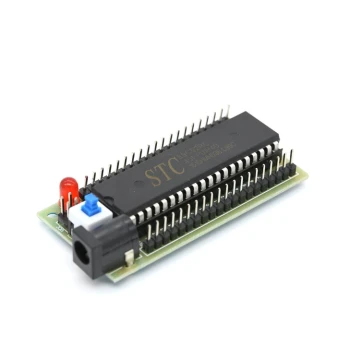
| Microcontroller Model | STM32F103VCT6 |
| Architecture | ARM Cortex-M3 32-bit RISC |
| Maximum Frequency | 72 MHz |
| Flash Memory | 256 KB |
| SRAM | 48 KB |
| GPIO Pins | 80+ Available IOs |
| Operating Voltage | 3.3V (5V tolerant inputs) |
| Debug Interface | SWD and JTAG |
| Board Dimensions | 54mm x 23mm |
| Package Type | LQFP100 |
Anonymous
Mar 27, 2026
Rating: 5/5
Great for learning ARM
Bought this for my university embedded systems course. It handles all the labs perfectly, from basic GPIO toggling to PWM motor control. Highly recommended for students.
Anonymous
Mar 25, 2026
Rating: 4/5
Solid performance, minor soldering needed
The core functionality is excellent. I had to solder headers myself as they weren't pre-installed, but that's expected for this form factor. Runs stable at 72MHz.
Anonymous
Mar 23, 2026
Rating: 5/5
Perfect for prototyping
This board is exactly what I needed for my robotics project. The pinout is clearly labeled, and it works flawlessly with the STM32CubeIDE. Great value for the price.
Anonymous
Mar 13, 2026
Rating: 4/5
Good quality control
Received the board quickly. No dead pixels or defective pins. Documentation could be slightly better, but the standard STM32 references work fine.
Anonymous
Mar 13, 2026
Rating: 5/5
Compact and powerful
Love how small this board is while still offering so many IO pins. Integrated it into a custom PCB design easily. The voltage regulation is stable.
Anonymous
Mar 12, 2026
Rating: 5/5
Best budget dev board
I have tried several clones, but this Lingzhi version feels the most robust. The crystal oscillator is accurate, and USB communication is reliable.
Q: Is this compatible with the Arduino IDE?
A: Yes, you can use this board with the Arduino IDE by installing the appropriate STM32 board support package (BSP) via the Board Manager.
Q: What is the maximum current draw per GPIO pin?
A: According to the STM32F103VC datasheet, each IO port can sink or source up to 25mA, with a total limit for all ports that should not be exceeded to ensure stability.
Q: What debugger do you recommend for this specific model?
A: We recommend using an ST-Link V2 or V3 programmer/debugger, which connects via the SWD interface pins located on the board edge.
Q: Can I power this board directly via USB?
A: This specific minimum system board does not have an onboard USB-to-UART converter. You must provide 3.3V power externally or use a separate breakout board for USB power and programming.
Q: Does this board come with pre-soldered pin headers?
A: No, this is a bare core board designed for flexibility. You will need to solder your own headers or connect via test points depending on your application.