Anonymous
Mar 21, 2026
Rating: 5/5
Seamless Arduino IDE integration
Flashed my first sketch within minutes of unboxing. The board is recognized immediately, and the compilation speed is surprisingly fast. The build quality feels premium.
Description
Reviews
| Brand | - |
| Category | Robotics / STEM Teaching Tools / Development, Learning, Evaluation & Industrial Control Boards |
| Origin | - |
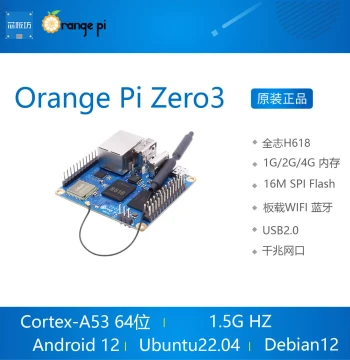
| Processor | ESP32-C5 RISC-V 32-bit MCU |
| Wi-Fi Standard | Wi-Fi 6 (802.11ax) supporting 2.4GHz and 5GHz |
| Bluetooth Version | Bluetooth 5.0 LE |
| Flash Memory | 4MB SPI Flash |
| Operating Voltage | 3.3V logic level |
| Input Voltage | 5V via USB-C or VIN pin |
| GPIO Pins | 20+ programmable GPIOs |
| Interface | USB Type-C for power and programming |
| Dimensions | 54mm x 25mm x 12mm |
| Compatibility | Arduino IDE, ESP-IDF, MicroPython |
Anonymous
Mar 21, 2026
Rating: 5/5
Seamless Arduino IDE integration
Flashed my first sketch within minutes of unboxing. The board is recognized immediately, and the compilation speed is surprisingly fast. The build quality feels premium.
Anonymous
Mar 21, 2026
Rating: 4/5
Great performance, minor documentation gaps
The C5 chip is fast and efficient. I love the USB-C port. However, some specific pinout diagrams for advanced peripherals were hard to find initially. Overall, a solid choice for prototyping.
Anonymous
Mar 18, 2026
Rating: 5/5
Best learning board for modern wireless protocols
As a student researching Wi-Fi 6, this board provided everything I needed. The community support is growing, and the price point is very reasonable for the features offered.
Anonymous
Mar 18, 2026
Rating: 5/5
Perfect for next-gen connected devices
Upgraded from an older ESP32 model. The power efficiency on Wi-Fi 6 is noticeable, extending battery life in my portable logger project. Highly recommended for serious developers.
Anonymous
Mar 12, 2026
Rating: 5/5
Excellent Wi-Fi 6 support for IoT projects
The dual-band Wi-Fi 6 capability is a game changer for my smart home sensors. Connection stability on the 5GHz band is impressive, and the board integrates seamlessly with ESP-IDF.
Anonymous
Mar 11, 2026
Rating: 4/5
Solid board for industrial control prototypes
We are using these for a factory monitoring prototype. The 5GHz band helps avoid congestion in our facility. Would give 5 stars if it came with header pins pre-soldered.
Q: Can I power this board directly with a 3.7V LiPo battery?
A: Yes, you can connect a LiPo battery to the BAT pin if the board has a dedicated charging circuit, or via the VIN pin (recommended range 5V-12V). For direct 3.7V input, please check the specific schematic as the onboard regulator requirements vary.
Q: Is the USB-C port used only for power or also for data flashing?
A: The USB-C port serves both purposes. It provides 5V power to the board and includes a built-in USB-to-UART bridge for flashing firmware and serial monitoring without external adapters.
Q: Is MicroPython supported out of the box?
A: MicroPython is fully supported on the ESP32-C5 architecture. While it may not come pre-flashed, you can easily install the latest MicroPython firmware using the esptool.py utility.
Q: Does this board support simultaneous 2.4GHz and 5GHz connections?
A: The ESP32-C5 chip supports both bands, but it operates on one frequency at a time. You can switch between 2.4GHz and 5GHz dynamically in your code, but not transmit/receive on both simultaneously.
Q: What is the maximum current draw for the GPIO pins?
A: Each GPIO pin can source or sink up to 40mA. However, the total current drawn from all GPIOs combined should not exceed the chip's maximum limit, typically around 200mA, to ensure stability.