Anonymous
Mar 27, 2026
Rating: 4/5
Great accuracy, minor soldering needed
The sensor readings are very consistent compared to my calibrated thermometer. I had to solder the header pins myself, which was expected, but the board quality is excellent.
Description
Reviews
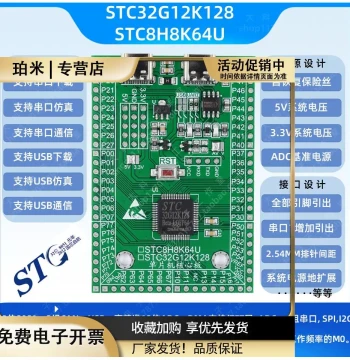
| Brand | - |
| Category | Robotics / STEM Teaching Tools / Sensors |
| Origin | - |
| Chip Model | MAX31865 |
| Supported Sensor Type | PT100, PT1000 RTD |
| Interface Protocol | SPI |
| Operating Voltage | 3.0V to 3.6V |
| Temperature Range | -200°C to +850°C |
| Resolution | 15-bit (0.03125°C) |
| Accuracy | ±0.5% typical |
| Fault Detection | Open/Short Circuit |
| Board Dimensions | 24mm x 18mm |
| Mounting Holes | 4x M2.5 |
Anonymous
Mar 27, 2026
Rating: 4/5
Great accuracy, minor soldering needed
The sensor readings are very consistent compared to my calibrated thermometer. I had to solder the header pins myself, which was expected, but the board quality is excellent.
Anonymous
Mar 26, 2026
Rating: 4/5
Good for roasting profiles
Using this to monitor bean temperature during roasting. Response time is quick enough to track changes. Would give 5 stars if it came with a terminal block instead of just pads.
Anonymous
Mar 23, 2026
Rating: 5/5
Perfect for Arduino Projects
This module works flawlessly with my Arduino Uno. The SPI communication is stable, and the library support makes reading temperatures incredibly easy. Highly recommended for DIY heating control systems.
Anonymous
Mar 10, 2026
Rating: 5/5
Reliable for long-term monitoring
I have been running this module for three months in a greenhouse setup. It handles humidity well and hasn't drifted. The fault detection feature saved me when a wire got chewed by a rodent.
Anonymous
Mar 04, 2026
Rating: 5/5
Excellent value for money
Much cheaper than buying a full industrial transmitter and just as accurate for hobbyist purposes. The documentation online is plentiful, making integration smooth.
Anonymous
Mar 03, 2026
Rating: 5/5
Robust and easy to use
We bought ten of these for our workshop. All of them worked out of the box. The noise rejection is impressive even near our 3D printer motors.
Q: Does this module work with 5V logic microcontrollers like the standard Arduino Uno?
A: Yes, the MAX31865 chip operates at 3.3V, but the breakout board includes level shifting resistors allowing it to safely interface with 5V logic SPI pins.
Q: Does the board come with a PT100 probe included?
A: No, this listing is for the breakout board module only. You will need to purchase a PT100 or PT1000 sensor probe separately based on your specific temperature range needs.
Q: Can I connect multiple sensors to one microcontroller?
A: Absolutely. Since it uses the SPI protocol, you can daisy-chain or individually select multiple modules using different Chip Select (CS) pins for each board.

Q: Is there a Python library available for Raspberry Pi?
A: Yes, there are several open-source Python libraries available on GitHub specifically designed for the MAX31865 on Raspberry Pi GPIO.
Q: What type of wires should I use to extend the PT100 sensor distance?
A: For best accuracy over longer distances, we recommend using a 3-wire or 4-wire configuration with shielded twisted pair cables to minimize noise interference.