Anonymous
Mar 31, 2026
Rating: 5/5
Excellent sensitivity
Connected this to a 5kg load cell and the precision is impressive. It can detect weight changes as small as a single gram without drifting too much over time.
Description
Reviews
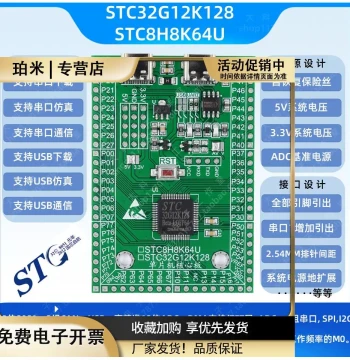
| Brand | - |
| Category | Robotics / STEM Teaching Tools / Sensors |
| Origin | - |
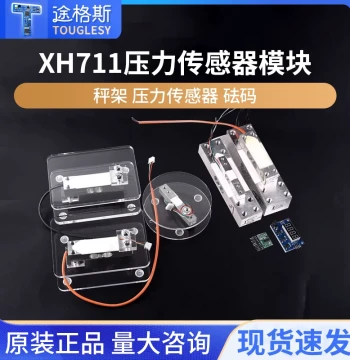
| Chip Model | HX711 |
| Resolution | 24-Bit ADC |
| Input Channels | 2 (Channel A and B) |
| Operating Voltage | 2.6V to 5.5V DC |
| Interface Type | Serial Interface (CLK, DT) |
| Sampling Rate | 10Hz or 80Hz selectable |
| Dimensions | 23mm x 17mm x 8mm |
| Weight | 2.5 grams |
| Compatibility | Arduino, Raspberry Pi, STM32 |
| Application | Electronic Scales, Force Sensors |
Anonymous
Mar 31, 2026
Rating: 5/5
Excellent sensitivity
Connected this to a 5kg load cell and the precision is impressive. It can detect weight changes as small as a single gram without drifting too much over time.
Anonymous
Mar 28, 2026
Rating: 4/5
Good value, small footprint
Compact size fits easily into tight enclosures. Signal noise is low when properly grounded. Only giving 4 stars because the pin headers were not included, had to solder my own.
Anonymous
Mar 24, 2026
Rating: 5/5
Best in class for the price
I have tried several different ADC modules, and this compact version offers the best balance of size, price, and performance for embedded weighing applications.
Anonymous
Mar 19, 2026
Rating: 5/5
Perfect for DIY Scale Projects
This module works flawlessly with my Arduino Uno. The 24-bit resolution provides very stable readings for my kitchen scale project. Setup was straightforward using existing libraries.
Anonymous
Mar 16, 2026
Rating: 5/5
Reliable and Precise
We used ten of these for a student robotics competition. All units performed consistently. The ability to switch between 10Hz and 80Hz sampling rates is a nice feature for filtering noise.
Anonymous
Mar 12, 2026
Rating: 4/5
Works as advertised
Standard HX711 performance. Documentation online is plentiful which helps beginners. Make sure you use a stable power supply to get the best accuracy.
Q: What is the maximum length for the wires connecting the load cell to the module?
A: For optimal signal integrity and noise reduction, we recommend keeping the load cell wires under 1 meter. If longer distances are required, shielded cables are strongly advised.
Q: Does this module come with a load cell included?
A: No, this listing is for the HX711 amplifier module only. You will need to purchase a compatible load cell separately based on your weight capacity requirements.
Q: Can I use this with a 3.3V microcontroller like the ESP32?
A: Yes, the module operates within a voltage range of 2.6V to 5.5V, making it fully compatible with 3.3V logic systems such as the ESP32 and Raspberry Pi.
Q: Is there a library available for Python on Raspberry Pi?
A: Yes, there are several open-source Python libraries available for the Raspberry Pi GPIO, such as 'hx711' or 'pi-hx711', which can be installed via pip to simplify integration.
Q: How do I switch between 10Hz and 80Hz sampling rates?
A: The sampling rate is selected by the number of clock pulses sent after a data read. 25 pulses select Channel A at 10Hz, 26 pulses select Channel B at 10Hz, and 27 pulses select Channel A at 80Hz. Most libraries handle this automatically via configuration.