Anonymous
Mar 30, 2026
Rating: 5/5
Ideal for learning embedded systems
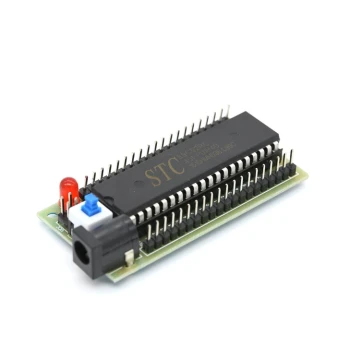
I bought this for my university project involving Android communication. It handled the data transfer reliably and the pinout is clearly labeled on the silkscreen.
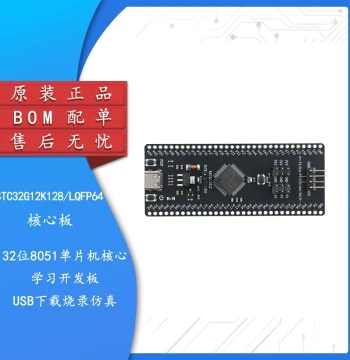
Description
Reviews
| Brand | - |
| Category | Robotics / STEM Teaching Tools / Development, Learning, Evaluation & Industrial Control Boards |
| Origin | - |
| Microcontroller | WCH CH559 |
| Architecture | 8051 Compatible |
| USB Interface | Native USB 2.0 Full Speed |
| Android Support | AOA (Android Open Accessory) Protocol |
| Operating Voltage | 3.3V / 5V Selectable |
| Flash Memory | 64KB On-Chip Flash |
| RAM | 4KB On-Chip RAM |
| GPIO Pins | Multiple Programmable I/O Ports |
| Programming Interface | UART / USB Bootloader |
| Board Dimensions | 55mm x 25mm |
Anonymous
Mar 30, 2026
Rating: 5/5
Ideal for learning embedded systems
I bought this for my university project involving Android communication. It handled the data transfer reliably and the pinout is clearly labeled on the silkscreen.
Anonymous
Mar 26, 2026
Rating: 4/5
Great value but docs could be better
Hardware quality is solid and the price is unbeatable. However, finding English documentation for specific register configurations took some digging. Overall recommended.
Anonymous
Mar 20, 2026
Rating: 5/5
Perfect for USB projects
This board is excellent for anyone looking to experiment with USB host functionality on an 8051 architecture. The AOA support works flawlessly with my Android phone.
Anonymous
Mar 20, 2026
Rating: 5/5
Exceeded expectations
Compact, robust, and powerful enough for my custom keyboard controller project. The ability to act as a USB host is a game changer at this price point.
Anonymous
Mar 05, 2026
Rating: 5/5
Smooth bootloader experience
Flashing firmware via the built-in USB bootloader was incredibly easy. No external programmer needed for basic tasks. Very happy with this purchase.
Anonymous
Mar 03, 2026
Rating: 4/5
Solid 8051 implementation
If you miss the 8051 architecture but need modern USB features, this is the chip to get. The speed is adequate for control tasks and sensor reading.
Q: What is the maximum current this board can supply to peripherals?
A: The board's LDO and USB bus limitations generally suggest keeping peripheral draw under 500mA. For high-power devices, an external powered hub is recommended.
Q: Can I program this using Arduino IDE?
A: Yes, there are community-supported cores that allow you to program the CH559 using the Arduino IDE, though it requires specific board manager URLs to be added.
Q: Are there example codes available for UART communication?
A: Yes, the manufacturer provides a SDK with C-language examples for UART, USB, and GPIO which can be found on their official repository or wiki.
Q: Is the Android AOA protocol supported out of the box?
A: The hardware supports it natively. However, you must write or flash firmware that implements the AOA handshake and communication logic; it is not pre-loaded with demo firmware.
Q: Does this board come with a USB cable included?
A: The package typically includes the development board only. A standard Micro-USB or Type-C cable (depending on the specific batch connector) is required for power and programming but is not always included.