Anonymous
Mar 22, 2026
Rating: 5/5
Exceeded expectations
Fast processing speed and the ability to overclock slightly gives extra headroom. The ADC accuracy is surprisingly good for analog sensor readings.
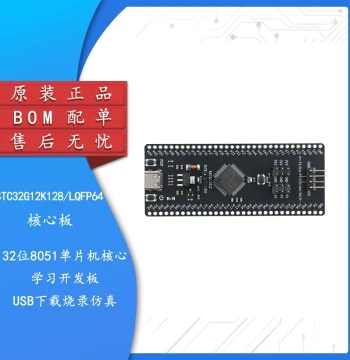
Description
Reviews
| Brand | - |
| Category | Robotics / STEM Teaching Tools / Development, Learning, Evaluation & Industrial Control Boards |
| Origin | - |
| Processor | Dual-core ARM Cortex-M0+ @ 133MHz |
| Flash Memory | 2MB On-board QSPI Flash |
| SRAM | 264KB Internal SRAM |
| GPIO Pins | 26 Multi-function GPIO Pins |
| ADC Channels | 3 x 12-bit SAR ADCs |
| Connectivity | USB 1.1 Host and Device Support |
| Programming Interface | Drag-and-drop UF2 Bootloader |
| Power Input | 5V via Micro-USB or VSYS Pin |
| Dimensions | 51mm x 21mm |
| Compatibility | MicroPython, C/C++, CircuitPython |
Anonymous
Mar 22, 2026
Rating: 5/5
Exceeded expectations
Fast processing speed and the ability to overclock slightly gives extra headroom. The ADC accuracy is surprisingly good for analog sensor readings.
Anonymous
Mar 18, 2026
Rating: 4/5
Solid build quality
The PCB feels sturdy and the USB connector is tight. It runs cool even under load. Would have given 5 stars if it came with header pins pre-soldered.
Anonymous
Mar 12, 2026
Rating: 5/5
Best board for university projects
Our entire class uses these now. The documentation support from the community is huge, and the hardware handles everything from sensor reading to motor control easily.
Anonymous
Mar 09, 2026
Rating: 5/5
Perfect for learning embedded systems
This board is incredibly easy to set up. The drag-and-drop programming feature makes it ideal for beginners, while the dual-core performance satisfies more advanced projects.
Anonymous
Mar 09, 2026
Rating: 4/5
Great value, minor pin labeling issue
Excellent performance for the price. My only small complaint is that the silkscreen pin labels are a bit faint, but once you map them out, it works flawlessly.
Anonymous
Mar 08, 2026
Rating: 5/5
Robust and reliable
I've used this for several IoT prototypes. The stability of the RP2040 chip combined with the generous memory makes this a standout choice in its category.
Q: Does this board come with header pins already soldered?
A: No, this domestic version typically ships without pre-soldered headers to allow for flexible mounting options. You will need to solder them yourself if required.
Q: Is this compatible with the Arduino IDE?
A: Yes, the RP2040 is fully supported in the Arduino IDE. You simply need to install the appropriate board manager package for the Raspberry Pi Pico.
Q: Does this version have WiFi or Bluetooth built-in?
A: No, the standard RP2040 chip does not include wireless connectivity. If you need WiFi or Bluetooth, you will need to attach an external module via UART, SPI, or I2C.
Q: Can I power this board with a 3.7V LiPo battery?
A: Yes, you can connect a LiPo battery to the VSYS pin, provided the voltage stays within the recommended range (1.8V to 5.5V). Ensure you manage charging separately as this board lacks an onboard charger.
Q: What is the maximum current draw per GPIO pin?
A: Each GPIO pin can safely source or sink up to 4mA. The total current drawn from all GPIO pins combined should not exceed 50mA to ensure stable operation.