Anonymous
Mar 15, 2026
Rating: 5/5
Easy to get started
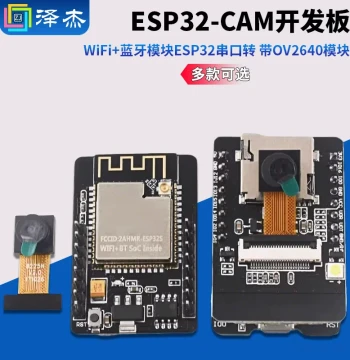
As someone transitioning from basic Arduino Uno, this board was easy to set up. The community support for ESP32 is huge, making it easy to find libraries for WiFi connectivity.
Description
Reviews
| Brand | - |
| Category | Robotics / STEM Teaching Tools / Development, Learning, Evaluation & Industrial Control Boards |
| Origin | - |
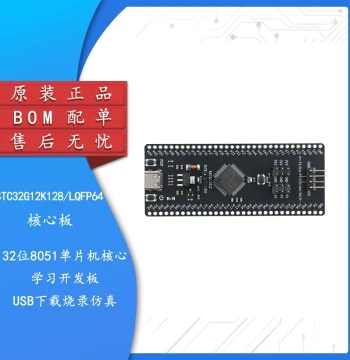
| Microcontroller | ESP32-S3 |
| Wireless Connectivity | Wi-Fi 802.11 b/g/n and Bluetooth 5 (LE) |
| Operating Voltage | 3.3V |
| Input Voltage | 5V via USB or VIN pin |
| Digital I/O Pins | 14 |
| Analog Input Pins | 8 (12-bit ADC) |
| Flash Memory | 16 MB |
| SRAM | 512 KB |
| USB Interface | USB-C with CH343 converter |
| Dimensions | 45mm x 18mm x 13mm |
Anonymous
Mar 15, 2026
Rating: 5/5
Easy to get started
As someone transitioning from basic Arduino Uno, this board was easy to set up. The community support for ESP32 is huge, making it easy to find libraries for WiFi connectivity.
Anonymous
Mar 14, 2026
Rating: 4/5
Solid choice for prototyping
Good build quality and the pin headers are soldered well. The only reason for 4 stars is that the 3.3V logic level requires careful attention when interfacing with 5V sensors without a level shifter.
Anonymous
Mar 12, 2026
Rating: 5/5
Perfect upgrade for IoT projects
The ESP32-S3 chip on this Nano form factor is a game changer. WiFi and Bluetooth work flawlessly out of the box with the Arduino IDE. The USB-C port is a welcome addition over the older micro-USB boards.
Anonymous
Mar 10, 2026
Rating: 5/5
Compact and powerful
I love how this fits into existing Nano shields while providing dual-core processing power. The battery management features are also very useful for portable projects.
Anonymous
Mar 05, 2026
Rating: 5/5
Ideal for smart home sensors
Using these for my entire garden monitoring system. The low power consumption in deep sleep mode combined with WiFi wake-up capabilities is exactly what I needed.
Anonymous
Mar 05, 2026
Rating: 4/5
Great board, minor driver hiccup
Excellent performance and plenty of GPIO pins for my sensor array. I had to manually install the CH343 driver on Windows 10 initially, but once that was sorted, uploading sketches was instant.
Q: What is the maximum current draw per GPIO pin?
A: Each GPIO pin can source or sink up to 40mA. However, the total current drawn from all ports combined should not exceed specific limits defined in the ESP32-S3 datasheet to prevent damage.
Q: Do I need an external antenna for WiFi?
A: No, the board comes with a built-in PCB antenna that provides sufficient range for most indoor and short-range outdoor applications. There is no connector for an external antenna on this specific model.
Q: Is this board compatible with the standard Arduino Nano shields?
A: Yes, the Arduino Nano ESP32 follows the standard Nano form factor and pinout, making it compatible with most shields designed for the Arduino Nano, provided the shield operates at 3.3V logic levels.
Q: Can I power this board directly with a 3.7V LiPo battery?
A: While the ESP32 chip runs on 3.3V, it is recommended to connect a LiPo battery to the VIN pin (which accepts 5V) or use a dedicated battery module with a regulator. Direct connection to the 3.3V pin is not advised unless you have a regulated source.

Q: Does this support MicroPython?
A: Absolutely. The ESP32-S3 chipset fully supports MicroPython. You can flash the firmware using tools like esptool.py and start coding in Python immediately.