Anonymous
Mar 29, 2026
Rating: 4/5
Solid performance
Good sensitivity and low power consumption. We tested it against more expensive sensors and the results were comparable for our specific application. The SPI interface is fast and reliable.
Description
Reviews
| Brand | - |
| Category | Robotics / STEM Teaching Tools / Sensors |
| Origin | - |
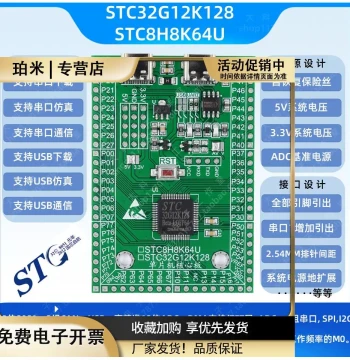
| Model Number | LIS3DSH |
| Axis Configuration | Three-Axis (X, Y, Z) |
| Measurement Range | ±2g / ±4g / ±6g / ±8g / ±16g |
| Output Data Rate | Up to 3.2 kHz |
| Interface Type | I2C and SPI |
| Operating Voltage | 1.71V to 3.6V |
| Resolution | 16-bit |
| Operating Temperature | -40°C to +85°C |
| Package Type | LGA-16 Module with Breakout Board |
| Application Focus | Motion Detection, Vibration Monitoring, Gaming |
Anonymous
Mar 29, 2026
Rating: 4/5
Solid performance
Good sensitivity and low power consumption. We tested it against more expensive sensors and the results were comparable for our specific application. The SPI interface is fast and reliable.
Anonymous
Mar 27, 2026
Rating: 5/5
Exceeded expectations
Bought this for a wearable device project. The size is perfect, and the battery life impact is negligible. The interrupt features are a nice bonus for saving processing power.
Anonymous
Mar 16, 2026
Rating: 5/5
Perfect for Arduino Projects
This sensor module works flawlessly with my Arduino Uno. The breakout board makes wiring incredibly easy, and the library support is robust. I used it for a gesture control project, and the responsiveness is excellent.
Anonymous
Mar 07, 2026
Rating: 5/5
Reliable industrial grade sensor
We are using these in a prototype for vibration monitoring on conveyor belts. The wide voltage range and temperature tolerance make it very versatile. Highly recommended for professional prototyping.
Anonymous
Mar 02, 2026
Rating: 4/5
Great accuracy, small footprint
Integrated this into a custom flight controller. The data is stable and noise is minimal even at higher sampling rates. Only giving 4 stars because the documentation could be slightly clearer on register mapping for beginners.
Anonymous
Mar 02, 2026
Rating: 5/5
Easy to get started
As someone new to embedded systems, I found this module very forgiving. The example code provided by the community got me up and running in less than an hour. Great value for money.
Q: Is there a Python library available for Raspberry Pi?
A: Yes, there are several open-source Python libraries available on GitHub that support the LIS3DSH via I2C on Raspberry Pi. We recommend checking the 'lsm303' or specific 'lis3dh' repositories.
Q: Is the 3.3V output regulated if I supply 5V?
A: Yes, the breakout board includes an onboard voltage regulator, allowing you to safely power the module with 5V logic while the sensor itself operates at 3.3V. However, ensure your microcontroller's logic levels are compatible.
Q: What is the maximum cable length for I2C communication?
A: For standard I2C speeds (100kHz), you can generally go up to 1-2 meters with good quality shielded cable. For faster speeds (400kHz or higher), we recommend keeping cables under 30cm to ensure signal integrity.
Q: Does this module come with header pins soldered?
A: No, the module typically comes with unsoldered header pins to allow for flexible mounting options. You will need to solder them yourself or use a breadboard with jumper wires.
Q: Can this sensor measure static gravity?
A: Absolutely. As a DC-response accelerometer, it can measure static acceleration due to gravity, which allows you to determine the tilt or orientation of the device when it is stationary.