Anonymous
Mar 22, 2026
Rating: 5/5
Essential for electronics class
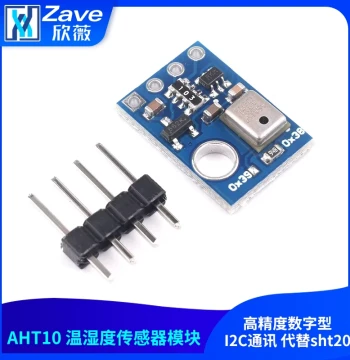
Bought this for a university project. It arrived quickly and the module version makes it much easier to breadboard than the bare component. Highly recommended for beginners.
Description
Reviews
| Brand | - |
| Category | Robotics / STEM Teaching Tools / Sensors |
| Origin | - |
| Model Number | DHT22 (AM2302) |
| Interface | Single-Bus Digital |
| Temperature Range | -40°C to +80°C |
| Temperature Accuracy | ±0.5°C |
| Humidity Range | 0% to 100% RH |
| Humidity Accuracy | ±2% RH |
| Operating Voltage | 3.3V - 6V DC |
| Sampling Period | 2 Seconds |
| Pin Count | 4 Pins |
| Application | Arduino, Raspberry Pi, IoT Projects |
Anonymous
Mar 22, 2026
Rating: 5/5
Essential for electronics class
Bought this for a university project. It arrived quickly and the module version makes it much easier to breadboard than the bare component. Highly recommended for beginners.
Anonymous
Mar 14, 2026
Rating: 5/5
Perfect for my weather station
This sensor works flawlessly with my Arduino Uno. The readings are consistent and match my professional hygrometer closely. Easy to wire up using the standard library.
Anonymous
Mar 08, 2026
Rating: 4/5
Good accuracy, slow sampling
Great for monitoring my greenhouse humidity. Just remember it only updates every 2 seconds, so don't expect real-time rapid changes. Otherwise, very reliable.
Anonymous
Mar 07, 2026
Rating: 5/5
Better than the DHT11
Upgraded from the blue DHT11 sensor and the difference in precision is noticeable immediately. Worth the extra cost for any serious environmental monitoring project.
Anonymous
Mar 03, 2026
Rating: 4/5
Works well with ESP32
Connected easily to my ESP32 board. Had to ensure I used a pull-up resistor, but the module often has one built-in. Readings are accurate enough for home automation triggers.
Anonymous
Mar 01, 2026
Rating: 5/5
Stable readings over time
I have had this running in my living room for three months now. No drift in values and it hasn't failed once. The build quality of the PCB looks solid.
Q: Is this compatible with the Raspberry Pi GPIO pins?
A: Yes, it is compatible. However, since Raspberry Pi GPIOs are 3.3V logic, ensure your specific module supports 3.3V logic levels or use a level shifter if necessary.
Q: What is the maximum cable length recommended for accurate readings?
A: For best results, keep the cable between the microcontroller and the sensor under 20 meters. Longer distances may require signal buffering or shielding.
Q: Does this module come with a pull-up resistor installed?
A: Yes, most DHT22 modules include a 10k ohm pull-up resistor on the data line, making it ready to use without additional components.
Q: Can I power this directly from a 5V USB source?
A: Absolutely. The DHT22 operates within a voltage range of 3.3V to 6V, so a standard 5V USB connection is perfectly safe and ideal.
Q: How do I calibrate the sensor if the readings seem off?
A: The DHT22 is factory calibrated and generally does not require user calibration. If readings are significantly off, check your wiring, power supply stability, or try a different code library.