Anonymous
Mar 26, 2026
Rating: 5/5
Perfect for ROS Learning
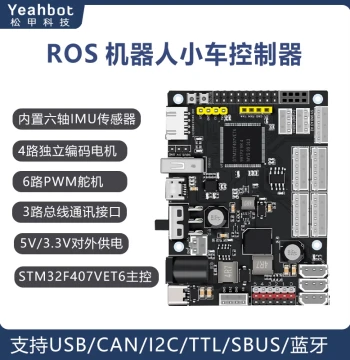
This board made setting up my first ROS robot incredibly easy. The integrated motor drivers work flawlessly with the STM32F407, and the documentation is clear.
Description
Reviews
| Brand | - |
| Category | Robotics / STEM Teaching Tools / Development, Learning, Evaluation & Industrial Control Boards |
| Origin | - |
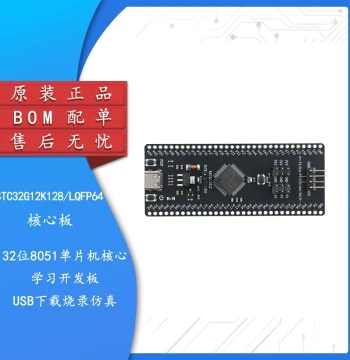
| Microcontroller | STM32F407VET6 |
| Supported OS | ROS / ROS2 |
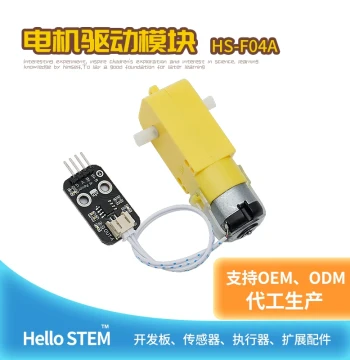
| Drive Control | Integrated 4-Wheel Motor Driver |
| Communication Interfaces | UART, CAN, I2C, SPI |
| Input Voltage | 7.4V - 12.6V DC |
| Max Motor Current | 2A per channel |
| Onboard Sensors | IMU (Accelerometer & Gyroscope) |
| Programming Language | C/C++, Python |
| Debug Interface | SWD/JTAG |
| Dimensions | 85mm x 55mm x 20mm |
Anonymous
Mar 26, 2026
Rating: 5/5
Perfect for ROS Learning
This board made setting up my first ROS robot incredibly easy. The integrated motor drivers work flawlessly with the STM32F407, and the documentation is clear.
Anonymous
Mar 17, 2026
Rating: 5/5
Excellent integration
Having the motor control and main processor on one board saves so much wiring time. The PWM outputs are stable, and my differential drive robot moves very smoothly.
Anonymous
Mar 13, 2026
Rating: 5/5
Community support is helpful
I had a question about the pinout mapping for ROS2 Humble, and the community examples provided with the board were very detailed. Highly recommended for developers.
Anonymous
Mar 08, 2026
Rating: 4/5
Good value for money
For the price, you get a lot of features. The only downside is that the heatsink gets warm under heavy load, but adding a small fan solved that issue immediately.
Anonymous
Mar 07, 2026
Rating: 5/5
Solid choice for university projects
We used these boards for our senior design project. They handled complex navigation algorithms without lagging. The CAN bus support was a huge plus for expanding sensors.
Anonymous
Mar 07, 2026
Rating: 4/5
Great hardware, steep learning curve
The build quality is excellent and the IMU data is accurate. However, beginners might find the initial configuration of the ROS environment a bit challenging without prior Linux knowledge.
Q: Does it come with a pre-installed operating system?
A: No, the board comes with bootloader firmware. You will need to install Ubuntu and ROS/ROS2 on your host computer or Raspberry Pi, which then communicates with this controller via USB or WiFi.
Q: What is the maximum voltage input tolerance?
A: The recommended input voltage range is 7.4V to 12.6V. While the board has protection circuits, we strongly advise against exceeding 13V to prevent damage to the voltage regulators.
Q: Are sample codes available for obstacle avoidance?
A: Yes, our official documentation includes a complete suite of example codes, including basic motion control, IMU data reading, and a simple obstacle avoidance algorithm using ultrasonic sensors.
Q: Can I connect an LiDAR sensor directly to this board?
A: Absolutely. The board features multiple UART ports specifically designed for connecting LiDAR sensors like the RPLidar A1 or A2. Power can be drawn from the 5V output pin.
Q: Is this board compatible with ROS2 Foxy?
A: Yes, the Wheeltec ROS board supports ROS2 Foxy as well as ROS Noetic. You will need to flash the appropriate firmware which is available in our GitHub repository.