Anonymous
Mar 27, 2026
Rating: 4/5
Reliable for industrial prototyping
Using these for initial prototypes of an industrial sensor node. Signal stability is strong, and the pinout is well-documented. Would recommend for professional evaluation.
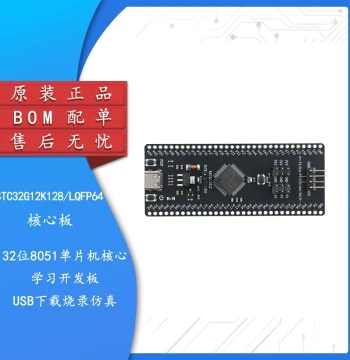
Description
Reviews
| Brand | - |
| Category | Robotics / STEM Teaching Tools / Development, Learning, Evaluation & Industrial Control Boards |
| Origin | - |
| Microcontroller | ESP32-C6 (RISC-V 32-bit) |
| Wireless Connectivity | Wi-Fi 6, Bluetooth 5.0 (LE), Zigbee 3.0, Thread |
| Flash Memory | 4 MB |
| Operating Voltage | 3.3V |
| Input Voltage | 5V via USB-C |
| GPIO Pins | 21 Programmable GPIOs |
| Interface | USB Type-C for Power and Data |
| Dimensions | 25.4 x 17.8 mm |
| Weight | 3.5 grams |
| Supported IDEs | Arduino IDE, ESP-IDF, MicroPython |
Anonymous
Mar 27, 2026
Rating: 4/5
Reliable for industrial prototyping
Using these for initial prototypes of an industrial sensor node. Signal stability is strong, and the pinout is well-documented. Would recommend for professional evaluation.
Anonymous
Mar 24, 2026
Rating: 5/5
RISC-V performance is solid
Switched from ESP32-S3 to this C6 model for the RISC-V architecture. Compilation times are fast, and the low power consumption in deep sleep mode is fantastic for battery projects.
Anonymous
Mar 14, 2026
Rating: 5/5
Perfect for Matter projects
This board is exactly what I needed for my smart home setup. The Thread and Zigbee support works flawlessly out of the box. Setup with ESP-IDF was smooth.
Anonymous
Mar 11, 2026
Rating: 4/5
Great value, small form factor
Impressed by how much connectivity is packed into such a tiny board. Wi-Fi 6 speeds are excellent. Only wish it had a built-in battery connector, but that's a minor issue.
Anonymous
Mar 09, 2026
Rating: 5/5
Seamless Arduino IDE integration
Plug and play with the latest Arduino core. All wireless protocols detected immediately. The USB-C port is a nice modern touch compared to older micro-USB boards.
Anonymous
Mar 08, 2026
Rating: 5/5
Easy to learn on
As someone new to embedded systems, the community support for ESP32 made this easy to start with. Plenty of examples for Bluetooth and Wi-Fi. Highly recommended for learners.
Q: Does this come with headers pre-soldered?
A: No, the board is shipped without headers to keep the profile low and allow for custom mounting. You will need to solder your own header pins if required.
Q: Can I power this board with a 3.7V LiPo battery directly?
A: No, this board does not have a built-in charging circuit or direct LiPo input. You must supply regulated 5V via the USB-C port or use an external regulator for the 3.3V pin.
Q: Does this board support Over-The-Air (OTA) updates?

A: Yes, the nanoESP32-C6 fully supports OTA updates via Wi-Fi using both Arduino IDE and ESP-IDF frameworks.
Q: Is the Bluetooth 5.0 capable of classic Bluetooth or just BLE?
A: The ESP32-C6 chip on this board supports Bluetooth Low Energy (BLE) 5.0. It does not support Classic Bluetooth.
Q: What is the maximum current draw per GPIO pin?
A: Each GPIO pin can source or sink up to 40mA. However, the total current for all IO ports combined should not exceed specific limits outlined in the datasheet to prevent damage.