Anonymous
Mar 28, 2026
Rating: 4/5
Solid clone performance
Works just like the original brand name boards but at a fraction of the cost. Drivers installed easily on Windows 10. Good choice for hobbyists on a budget.
Description
Reviews
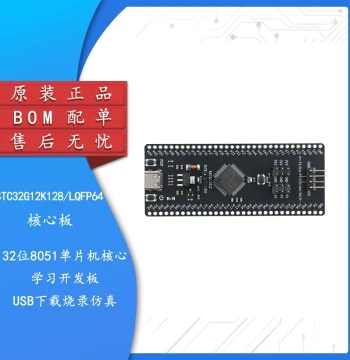
| Brand | - |
| Category | Robotics / STEM Teaching Tools / Development, Learning, Evaluation & Industrial Control Boards |
| Origin | - |
| Microcontroller | ATmega328P |
| Operating Voltage | 5V |
| Digital I/O Pins | 14 (6 PWM outputs) |
| Analog Input Pins | 8 |
| Flash Memory | 32 KB (2 KB used by bootloader) |
| SRAM | 2 KB |
| EEPROM | 1 KB |
| Clock Speed | 16 MHz |
| USB Interface | Mini-B USB Connector |
| Dimensions | 18mm x 45mm |
Anonymous
Mar 28, 2026
Rating: 4/5
Solid clone performance
Works just like the original brand name boards but at a fraction of the cost. Drivers installed easily on Windows 10. Good choice for hobbyists on a budget.
Anonymous
Mar 25, 2026
Rating: 4/5
Great value, minor soldering needed
The board works flawlessly with the Arduino IDE. The only reason for 4 stars is that the header pins were not pre-soldered on my unit, but that was easy to fix. Performance is solid.
Anonymous
Mar 20, 2026
Rating: 5/5
Perfect for beginners and prototyping
This Nano board is exactly what I needed for my home automation project. It fits perfectly on a breadboard and the ATmega328P handles all my sensor inputs without any lag. Highly recommended for students.
Anonymous
Mar 18, 2026
Rating: 5/5
Compact and powerful
I love how small this form factor is compared to the Uno. It makes it much easier to integrate into final projects where space is limited. Upload speeds are fast and stable.
Anonymous
Mar 10, 2026
Rating: 5/5
Essential for university projects
Bought three of these for my robotics class. They are reliable, cheap, and have plenty of I/O for motor drivers and ultrasonic sensors. No issues so far after weeks of testing.
Anonymous
Mar 01, 2026
Rating: 5/5
Reliable for industrial prototypes
We use these for initial prototyping before moving to custom PCBs. The consistency between boards is impressive, and the 16MHz clock speed is sufficient for most control logic tasks.
Q: Is this compatible with the standard Arduino IDE?
A: Yes, this board is fully compatible with the Arduino IDE. You simply need to select 'Arduino Nano' as the board type and choose the appropriate processor (ATmega328P) in the tools menu.
Q: Does it support sleep modes for low power applications?
A: Absolutely. Since it uses the ATmega328P, you can utilize various sleep modes (Idle, ADC Noise Reduction, Power-down, etc.) by programming the appropriate registers or using power management libraries.
Q: Can I power this board with a 9V battery?
A: Yes, you can power the board via the VIN pin using a 9V battery. The onboard voltage regulator will step it down to the required 5V for the microcontroller.
Q: What is the maximum current this board can supply to peripherals?
A: Each I/O pin can provide or receive a maximum of 40mA. The 3.3V pin can supply up to 50mA, and the 5V pin depends on your USB source or external power supply limits.
Q: Does this board come with header pins pre-soldered?
A: It depends on the specific batch, but many units ship without pre-soldered headers to allow for flexible mounting options. You may need to solder them yourself or use female pin connectors.