Anonymous
Mar 28, 2026
Rating: 4/5
Great value, minor driver issue
Board works great once installed. Had to manually install the CH340 drivers on Windows 10, but after that, uploading sketches was smooth. Highly recommend for learning.
Description
Reviews
| Brand | - |
| Category | Robotics / STEM Teaching Tools / Development, Learning, Evaluation & Industrial Control Boards |
| Origin | - |
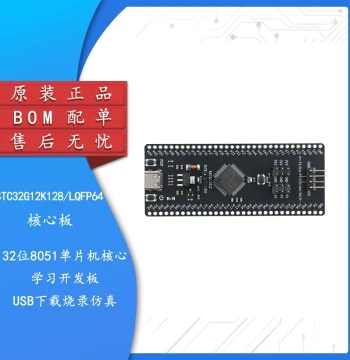
| Microcontroller | ATmega2560 |
| Operating Voltage | 5V |
| Digital I/O Pins | 54 (15 PWM outputs) |
| Analog Input Pins | 16 |
| DC Current per I/O Pin | 20 mA |
| Flash Memory | 256 KB (8 KB used by bootloader) |
| SRAM | 8 KB |
| EEPROM | 4 KB |
| Clock Speed | 16 MHz |
| USB Interface Chip | CH340 / ATmega16U2 Compatible |
Anonymous
Mar 28, 2026
Rating: 4/5
Great value, minor driver issue
Board works great once installed. Had to manually install the CH340 drivers on Windows 10, but after that, uploading sketches was smooth. Highly recommend for learning.
Anonymous
Mar 17, 2026
Rating: 4/5
Good board, slow shipping
The hardware itself is fantastic and fully compatible with existing libraries. Only giving 4 stars because shipping took longer than expected, but the product meets all specifications.
Anonymous
Mar 16, 2026
Rating: 5/5
Excellent upgrade from Uno
If you have outgrown the Uno, this is the logical next step. The pin layout is familiar, but the capabilities are vastly expanded. My kids love using it for their science fair projects.
Anonymous
Mar 15, 2026
Rating: 5/5
Stable for long-term runs
Running this board 24/7 for data logging. It hasn't crashed or rebooted unexpectedly in three weeks. Very stable power regulation and good heat dissipation.
Anonymous
Mar 10, 2026
Rating: 5/5
Perfect for complex projects
The extra memory and I/O pins on this MEGA 2560 are exactly what I needed for my 3D printer controller. It works flawlessly with the standard Arduino IDE.
Anonymous
Mar 08, 2026
Rating: 5/5
Reliable and robust
I've used several of these boards for robotics competitions. They handle multiple servos and sensors without breaking a sweat. The build quality is solid.
Q: Can I use 3.3V sensors with this board?
A: The digital I/O pins operate at 5V logic levels. While there is a 3.3V output pin available for powering sensors, you must ensure your 3.3V sensors are 5V tolerant or use a logic level converter when connecting them to the digital pins to avoid damage.
Q: Is this board compatible with the standard Arduino IDE?
A: Yes, this board is fully compatible with the Arduino IDE. You may need to select 'Arduino Mega or Mega 2560' from the board manager and install the appropriate USB-to-serial drivers if your OS does not recognize the CH340 chip automatically.
Q: Can this board power a Raspberry Pi?
A: While the 5V pin can output current, we do not recommend powering a Raspberry Pi directly from the MEGA 2560's voltage regulator as it may exceed the current limits and cause instability. It is best to power both boards with separate, adequate power supplies.
Q: Does this come with a USB cable?
A: This package typically includes only the development board. A standard USB Type-B printer cable is required to connect the board to your computer and is sold separately.
Q: What is the difference between the CH340 and ATmega16U2 versions?
A: Both chips serve as the USB-to-Serial converter. The ATmega16U2 is the original chip used on official boards, while the CH340 is a cost-effective alternative. Functionally, they perform the same task, though driver installation steps may differ slightly depending on your operating system.