Anonymous
Mar 27, 2026
Rating: 5/5
Reliable water detection
I used three of these in a tank monitoring project. They have been running for two weeks without false positives. The digital output makes interfacing with microcontrollers very simple.
Description
Reviews
| Brand | - |
| Category | Robotics / STEM Teaching Tools / Sensors |
| Origin | - |
| Operating Voltage | 3.3V - 5V DC |
| Output Type | Digital Switch Output (0 and 1) |
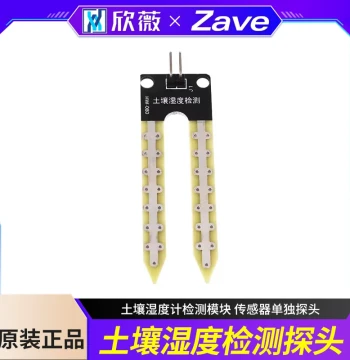
| Detection Area | 40mm x 16mm |
| Comparator Chip | LM393 |
| Sensitivity Adjustment | Potentiometer included |
| Board Dimensions | 62mm x 20mm x 8mm |
| Mounting Hole Diameter | 3.1mm |
| Interface | 3-pin PH2.54 connector |
| Material | FR-4 PCB with Nickel Plating |
| Application | Water level monitoring, rain detection, leak alarms |
Anonymous
Mar 27, 2026
Rating: 5/5
Reliable water detection
I used three of these in a tank monitoring project. They have been running for two weeks without false positives. The digital output makes interfacing with microcontrollers very simple.
Anonymous
Mar 24, 2026
Rating: 5/5
Perfect for my Arduino rain alarm
This sensor works exactly as described. The sensitivity adjustment via the potentiometer is very responsive, allowing me to fine-tune when the alarm triggers. Great value for the price.
Anonymous
Mar 22, 2026
Rating: 4/5
Works well for leak detection
Placed one under my washing machine. It detects small droplets quickly. The only downside is the connector cable is a bit short, so I had to extend it myself.
Anonymous
Mar 18, 2026
Rating: 4/5
Good quality but needs calibration
The build quality is solid and the soldering points are clean. Just remember to spend time calibrating the threshold; otherwise, it might trigger too easily with humidity alone.
Anonymous
Mar 09, 2026
Rating: 5/5
Excellent sensitivity control
The LM393 comparator does a great job. I can adjust it to ignore minor condensation but still catch actual water accumulation. Very satisfied with this purchase.
Anonymous
Mar 02, 2026
Rating: 5/5
Great for learning projects
Bought this for a university IoT project. It was easy to connect to an ESP32 and the code examples found online worked immediately. Highly recommend for students.
Q: How do I clean the sensor if it gets dirty or corroded?
A: You can gently wipe the sensing traces with a soft cloth dampened with distilled water or isopropyl alcohol. Avoid using abrasive materials that could scratch the nickel plating.
Q: Does this work with 3.3V logic systems like ESP8266?
A: Yes, the operating voltage range is 3.3V to 5V, making it fully compatible with 3.3V microcontrollers such as the ESP8266, ESP32, and standard 5V Arduinos.
Q: What is the maximum current this module can handle?
A: The module is designed for signal detection, not power switching. The output current should typically remain below 20mA to ensure the longevity of the comparator chip.
Q: Is this sensor waterproof for long-term submersion?
A: The sensing area is designed to detect water, but the electronic components and solder joints on the back are not fully waterproof. For long-term submersion, we recommend conformal coating or placing the electronics in a waterproof enclosure while exposing only the sensor traces.
Q: Can this sensor measure the exact depth of the water in millimeters?
A: No, this module provides a digital switch output (high/low) indicating the presence or absence of water on the sensing traces. It does not provide analog depth measurement data.