Anonymous
Mar 29, 2026
Rating: 5/5
Fast shipping and works as described
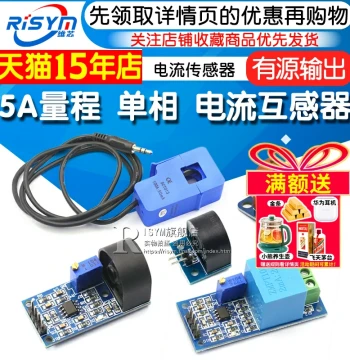
Arrived quickly and was exactly as pictured. Using it to monitor solar panel output. The isolation feature gives me peace of mind when working with higher voltages.
Description
Reviews
| Brand | - |
| Category | Robotics / STEM Teaching Tools / Sensors |
| Origin | - |
| Brand | TOUGLESY |
| Model Number | ACS712T |
| Sensor Type | Hall Effect Current Sensor |
| Available Ranges | 5A, 20A, 30A |
| Operating Voltage | 5V DC |
| Output Sensitivity (5A) | 185 mV/A |
| Output Sensitivity (20A) | 100 mV/A |
| Output Sensitivity (30A) | 66 mV/A |
| Response Time | 5 µs |
| Package Includes | 1 x ACS712T Module Board |
Anonymous
Mar 29, 2026
Rating: 5/5
Fast shipping and works as described
Arrived quickly and was exactly as pictured. Using it to monitor solar panel output. The isolation feature gives me peace of mind when working with higher voltages.
Anonymous
Mar 22, 2026
Rating: 5/5
Great for learning electronics
Bought the 5A version for a university project. It's easy to interface with microcontrollers and the documentation online is plentiful. Highly recommended for beginners.
Anonymous
Mar 17, 2026
Rating: 4/5
Good value but needs filtering
The module is compact and well-soldered. However, I noticed some noise in the output signal, so I had to add a simple capacitor filter. Once filtered, the readings are very stable.
Anonymous
Mar 15, 2026
Rating: 5/5
Perfect for Arduino projects
This sensor works flawlessly with my Arduino Uno. The 20A version is great for monitoring my motor driver current. Calibration was straightforward using the provided example code.
Anonymous
Mar 11, 2026
Rating: 5/5
Reliable and accurate
I compared this against a multimeter clamp, and the readings were within 2% accuracy. Excellent for battery management systems where space is limited.
Anonymous
Mar 10, 2026
Rating: 4/5
Solid build quality
The PCB looks professional and the terminals are sturdy. Just make sure you select the correct range for your application; don't exceed the max rating or you might damage it.
Q: Is the 30A version safe for measuring mains electricity?
A: While the sensor provides galvanic isolation, we recommend exercising extreme caution and proper enclosure when dealing with mains electricity. Ensure all connections are insulated and follow local safety regulations.
Q: How do I calibrate the sensor for better accuracy?
A: You can calibrate by measuring the zero-current output voltage (should be ~2.5V) and adjusting your code offset. Then, pass a known current through the sensor and adjust the sensitivity factor in your software until the reading matches a reference meter.
Q: What is the operating temperature range for this board?
A: The standard operating temperature range for the ACS712 chip is typically -40°C to +85°C, making it suitable for most indoor and protected outdoor applications.
Q: Do I need an external power supply for the sensor?
A: Yes, the module requires a 5V DC power supply, which can usually be provided directly from your microcontroller board like an Arduino or Raspberry Pi.
Q: Can this module measure AC current as well as DC?
A: Yes, the ACS712T Hall effect sensor can measure both AC and DC current. The output voltage will vary around the VCC/2 baseline depending on the direction and type of current.