Anonymous
Mar 22, 2026
Rating: 5/5
Excellent build quality
The soldering on the board is neat, and the components feel durable. I appreciate that it provides both analog and digital outputs, giving flexibility for various applications.
Description
Reviews
| Brand | - |
| Category | Robotics / STEM Teaching Tools / Sensors |
| Origin | - |
| Operating Voltage | 3.3V - 5V DC |
| Output Type | Digital Switch Output (DO) |
| Analog Output | Yes (AO) |
| Detection Range | Adjustable via Potentiometer |
| Comparator Chip | LM393 |
| PCB Dimensions | 32mm x 14mm |
| Mounting Hole Diameter | 3mm |
| Included Accessories | 4-pin Dupont Lines |
| Indicator LED | Power and Trigger Status |
| Compatible Platforms | Arduino, Raspberry Pi, ESP32 |
Anonymous
Mar 22, 2026
Rating: 5/5
Excellent build quality
The soldering on the board is neat, and the components feel durable. I appreciate that it provides both analog and digital outputs, giving flexibility for various applications.
Anonymous
Mar 20, 2026
Rating: 4/5
Works as described
Simple to use and does exactly what it says. The only reason for 4 stars instead of 5 is that the LED indicator is quite bright at night, which might be distracting in some setups.
Anonymous
Mar 12, 2026
Rating: 4/5
Good quality, clear instructions needed
The hardware quality is solid and the Dupont lines included are a nice touch. It took me a moment to figure out the pinout without a diagram, but once connected, it detected light changes instantly.
Anonymous
Mar 09, 2026
Rating: 5/5
Reliable and Sensitive
I used this for a automatic night light project. The response time is quick and the digital output is clean. No noise issues observed. Highly recommended for beginners.
Anonymous
Mar 08, 2026
Rating: 5/5
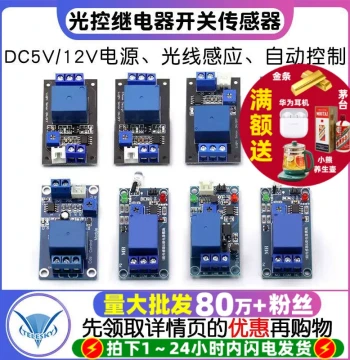
Great for line following robots too
While marketed for light detection, I successfully used this array for line following by reflecting IR light. Very versatile module for the cost.
Anonymous
Mar 07, 2026
Rating: 5/5
Perfect for Arduino Projects
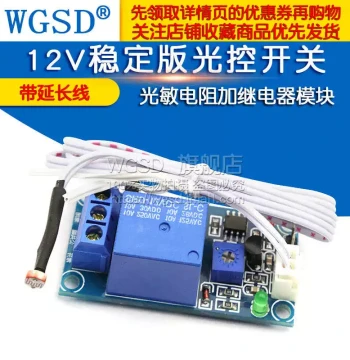
This sensor module works flawlessly with my Arduino Uno. The sensitivity adjustment potentiometer makes it very easy to calibrate for different lighting conditions. Great value for the price.
Q: How do I adjust the sensitivity threshold?
A: There is a blue potentiometer on the board. Rotate it clockwise to increase sensitivity (trigger in lower light) or counter-clockwise to decrease it using a small screwdriver.
Q: Can I use the analog output to measure specific lux values?
A: The analog output provides a voltage proportional to light intensity, but it is not calibrated to specific Lux units. You would need to create your own calibration curve based on your environment.
Q: Does this module work with 3.3V logic levels like ESP32?
A: Yes, the module operates on a voltage range of 3.3V to 5V, making it fully compatible with ESP32, Arduino, and Raspberry Pi GPIO pins.
Q: Are the Dupont wires male-to-male or female-to-female?
A: The included Dupont lines are Female-to-Male, designed to connect directly from the sensor header pins to a breadboard or microcontroller.
Q: What is the maximum current consumption of this sensor?
A: The typical current consumption is approximately 10mA when the power LED and output LED are active, which is safe for most microcontroller pins.