Anonymous
Mar 28, 2026
Rating: 4/5
Works great after calibration
Out of the box, readings were slightly off, but after performing a two-point calibration, the accuracy is spot on. The module stays cool even after hours of operation.
Description
Reviews
| Brand | - |
| Category | Robotics / STEM Teaching Tools / Sensors |
| Origin | - |
| Model Number | CS1237/CS1238 |
| Resolution | 24-Bit |
| Reference Voltage Chip | TL431 |
| Communication Interface | SPI / 2-Wire |
| Operating Voltage | 2.7V to 5.5V |
| Input Channels | 2 Differential Channels |
| Sampling Rate | Up to 80 SPS |
| Application | Electronic Weighing Scales |
| Package Type | Module with Pin Headers |
| Compatibility | Arduino, STM32, ESP32 |
Anonymous
Mar 28, 2026
Rating: 4/5
Works great after calibration
Out of the box, readings were slightly off, but after performing a two-point calibration, the accuracy is spot on. The module stays cool even after hours of operation.
Anonymous
Mar 27, 2026
Rating: 4/5
Good value, clear documentation needed
The hardware quality is excellent and the price is unbeatable. However, I had to search online for a good library to get it running quickly. Once configured, the noise rejection is impressive.
Anonymous
Mar 25, 2026
Rating: 5/5
High precision achieved
I was skeptical about the price point, but the accuracy rivals much more expensive ADCs. The differential input helps cancel out common-mode noise effectively. Highly recommended for precision weighing.
Anonymous
Mar 15, 2026
Rating: 5/5
Solid choice for industrial prototypes
Used this for a prototype industrial hopper scale. The stability over temperature changes is better than expected for this price range. The pin layout is standard and easy to breadboard.
Anonymous
Mar 10, 2026
Rating: 5/5
Reliable for student projects
We bought ten of these for our university robotics lab. They are robust and handle the 2-wire interface well. Students find them easy to integrate into their weight sensing assignments.
Anonymous
Mar 01, 2026
Rating: 5/5
Perfect for DIY Scale Projects
This module works flawlessly with my Arduino Uno. The 24-bit resolution provides very stable readings for my kitchen scale project. The onboard TL431 reference chip ensures consistent voltage, which was a problem in my previous design.
Q: Is there a difference between the CS1237 and CS1238 versions on this board?
A: Functionally, they are very similar. The primary difference lies in the package type of the internal chip and minor variations in power consumption. For most weighing applications, the performance is identical.
Q: What is the maximum load cell resistance this can drive?
A: This ADC module is designed to work with standard strain gauge load cells, typically ranging from 350 ohms to 1000 ohms. It provides sufficient excitation voltage for most commercial load cells.
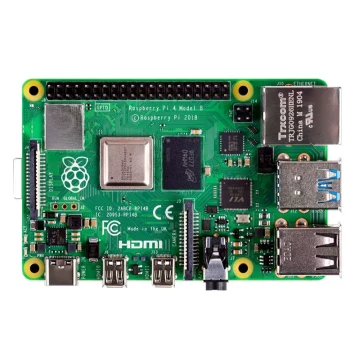
Q: Can I use this with a Raspberry Pi?
A: Absolutely. Since the module uses a serial interface (often bit-banged SPI or a specific 2-wire protocol), it can be easily controlled by a Raspberry Pi using GPIO pins and Python libraries.
Q: Does the package include the load cell or just the ADC module?
A: This listing is for the ADC module only. The load cell (weight sensor) must be purchased separately and connected to the E+, E-, A+, and A- terminals on the board.

Q: Does this module support 3.3V logic levels directly?
A: Yes, the CS1237/1238 module operates within a voltage range of 2.7V to 5.5V, making it fully compatible with both 3.3V and 5V microcontroller systems without level shifters.