Anonymous
Mar 29, 2026
Rating: 4/5
Good for learning embedded systems
Bought this for my university final year project. It's affordable and has plenty of resources online. Only wish it came with header pins pre-soldered as an option.
Description
Reviews
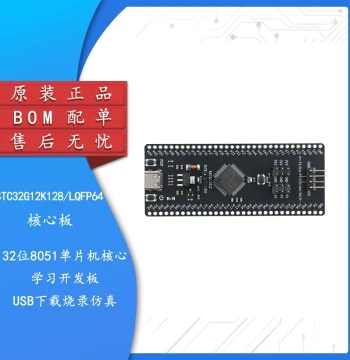
| Brand | - |
| Category | Robotics / STEM Teaching Tools / Development, Learning, Evaluation & Industrial Control Boards |
| Origin | - |
| Processor | ESP32-S3FH4R2 Dual-Core Xtensa LX7 |
| Clock Frequency | Up to 240 MHz |
| Flash Memory | 4 MB Quad SPI |
| PSRAM | 2 MB Octal SPI |
| Wireless Connectivity | Wi-Fi 802.11b/g/n and Bluetooth 5 (LE) |
| GPIO Pins | 21 Programmable GPIOs |
| Interface Support | USB OTG, SPI, I2C, I2S, UART, PWM |
| Power Supply | 5V via USB-C or 3.3V external |
| Dimensions | 25.4 x 17.8 mm |
| Operating Temperature | -40°C to +85°C |
Anonymous
Mar 29, 2026
Rating: 4/5
Good for learning embedded systems
Bought this for my university final year project. It's affordable and has plenty of resources online. Only wish it came with header pins pre-soldered as an option.
Anonymous
Mar 24, 2026
Rating: 5/5
Reliable for Home Automation
Running multiple instances of these in my smart home setup. They connect reliably to my MQTT broker and haven't dropped connection in weeks. Very stable firmware support.
Anonymous
Mar 13, 2026
Rating: 5/5
Compact powerhouse
Don't let the size fool you. The 2MB PSRAM allows me to run complex image processing tasks for my camera module project. Waveshare continues to deliver quality boards.
Anonymous
Mar 06, 2026
Rating: 5/5
Bluetooth 5 LE is a game changer
I'm using this for a low-power wearable project. The Bluetooth 5 LE range and stability are significantly better than the older ESP32 models I've used. Highly recommended.
Anonymous
Mar 01, 2026
Rating: 4/5
Great value, minor documentation gaps
Hardware quality is excellent and the USB-C port is a nice touch. Had to dig into the ESP-IDF docs for some specific pin mappings, but once configured, it works flawlessly.
Anonymous
Mar 01, 2026
Rating: 5/5
Perfect for IoT Prototyping
This board is incredibly compact yet powerful. The dual-core processor handles my sensor data logging and Wi-Fi transmission without any lag. Setup with Arduino IDE was seamless.
Q: Does this board support MicroPython out of the box?
A: Yes, the ESP32-S3 chip is fully compatible with MicroPython. You will need to flash the latest MicroPython firmware binary onto the board using a tool like esptool.py.
Q: Can I power this board directly with a 3.7V LiPo battery?
A: No, this specific model does not have an onboard charging circuit or direct LiPo input. You should use a regulated 5V source via the USB-C port or a stable 3.3V source if you have an external regulator.
Q: What is the maximum current this board can supply to external sensors via the 3.3V pin?
A: The onboard LDO regulator can typically supply up to 500mA total for the board and peripherals. However, for stability, we recommend drawing no more than 200-300mA from the 3.3V pin for external components.
Q: Does the package include headers for soldering?
A: This module is typically sold without pre-soldered headers to keep the profile low for custom enclosures. You will need to purchase male or female header pins separately if you plan to use it on a breadboard.
Q: Is the USB interface capable of acting as a native USB device (OTG)?
A: Yes, the ESP32-S3 supports native USB OTG. You can configure it to act as a USB keyboard, mouse, or MIDI device directly without needing an external USB-to-UART bridge for those functions.