Anonymous
Mar 28, 2026
Rating: 5/5
Reliable for industrial prototyping
We used these boards for initial prototyping of a control module. They handled continuous operation without overheating and the SWD debugging was stable.
Description
Reviews
| Brand | - |
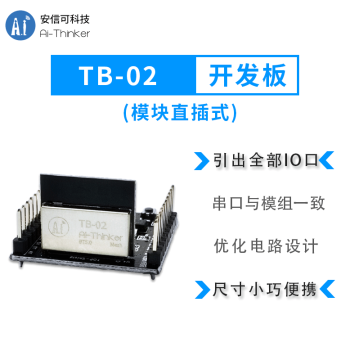
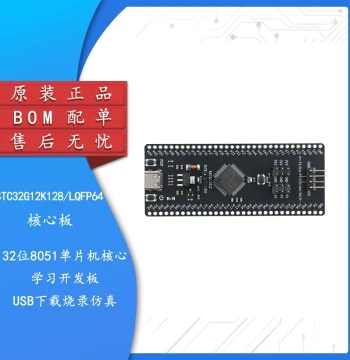
| Category | Robotics / STEM Teaching Tools / Development, Learning, Evaluation & Industrial Control Boards |
| Origin | - |
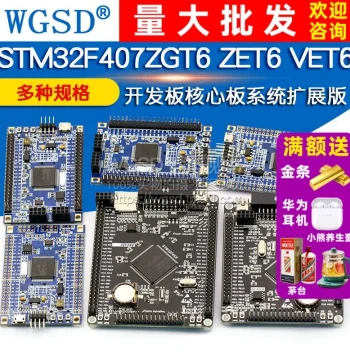
| Core Processor | ARM Cortex-M3 (STM32F103) or Cortex-M4 (STM32F401) |
| Flash Memory | 256 KB |
| SRAM | 48 KB |
| Operating Voltage | 3.3V |
| Input Voltage | 5V via Micro-USB or VIN pin |
| Clock Speed | Up to 72 MHz (F103) / 84 MHz (F401) |
| GPIO Pins | 32+ programmable I/O lines |
| Communication Interfaces | UART, SPI, I2C, CAN, USB OTG |
| Debug Interface | SWD (Serial Wire Debug) |
| Board Dimensions | 54mm x 23mm |
Anonymous
Mar 28, 2026
Rating: 5/5
Reliable for industrial prototyping
We used these boards for initial prototyping of a control module. They handled continuous operation without overheating and the SWD debugging was stable.
Anonymous
Mar 26, 2026
Rating: 5/5
Best learning board for ARM
As a university student, this was my first step into 32-bit microcontrollers. The community support is huge, making it easy to find tutorials and libraries.
Anonymous
Mar 21, 2026
Rating: 5/5
Perfect for embedded projects
This board is incredibly compact yet packs all the necessary features for my robotics project. The pinout is clearly labeled, and it works flawlessly with the STM32CubeIDE.
Anonymous
Mar 19, 2026
Rating: 4/5
Great value, minor documentation gaps
Hardware quality is excellent for the price. I wish the included quick start guide had more examples for the I2C interface, but online communities filled the gap quickly.
Anonymous
Mar 17, 2026
Rating: 5/5
Exceeded expectations
I was skeptical about the low price, but the build quality is surprisingly good. Soldering points are clean, and the voltage regulator works perfectly.
Anonymous
Mar 07, 2026
Rating: 4/5
Solid performance
The clock speed is sufficient for most real-time applications. The only downside is that the USB connector feels slightly fragile, so handle with care.
Q: What is the difference between the F103 and F401 versions?
A: The F103 uses a Cortex-M3 core running up to 72MHz, while the F401 uses a newer Cortex-M4 core with FPU support running up to 84MHz, offering better performance for floating-point calculations.
Q: What debugger do I need to use with this module?
A: This board supports SWD debugging. You can use an ST-Link V2, J-Link, or any compatible SWD debugger to flash and debug code.
Q: Is this board compatible with the Arduino IDE?
A: Yes, you can program this board using the Arduino IDE by installing the appropriate STM32 board package via the Board Manager.
Q: Can I power this directly from a 9V battery?
A: It is recommended to use a 5V source via the USB port or VIN pin. While the onboard regulator can handle some variance, a 9V battery should be connected through a proper buck converter or regulated supply to ensure stability.
Q: Does it come with headers pre-soldered?
A: No, the board is typically shipped without headers soldered to allow for flexible mounting options. You will need to solder your own pin headers.