Anonymous
Mar 31, 2026
Rating: 5/5
Reliable for prototyping
We used several of these for rapid prototyping before moving to custom PCBs. The stability has been excellent, and the pin compatibility matches the datasheet perfectly.
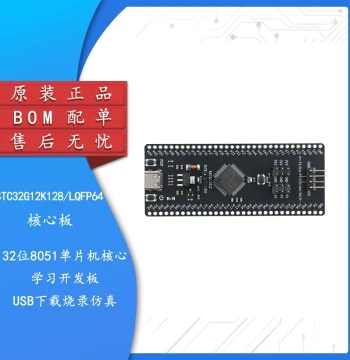
Description
Reviews
| Brand | - |
| Category | Robotics / STEM Teaching Tools / Development, Learning, Evaluation & Industrial Control Boards |
| Origin | - |
| Microcontroller Model | STM32F401CCU6 |
| Architecture | ARM Cortex-M4 32-bit RISC |
| Maximum Frequency | 84 MHz |
| Flash Memory | 256 KB |
| SRAM | 64 KB |
| Operating Voltage | 3.3V |
| Input Voltage Range | 5V via Micro USB or VIN pin |
| I/O Pins | 36 GPIOs available |
| Interface Support | UART, SPI, I2C, ADC, DAC, PWM |
| Programmer Interface | SWD (Serial Wire Debug) |
Anonymous
Mar 31, 2026
Rating: 5/5
Reliable for prototyping
We used several of these for rapid prototyping before moving to custom PCBs. The stability has been excellent, and the pin compatibility matches the datasheet perfectly.
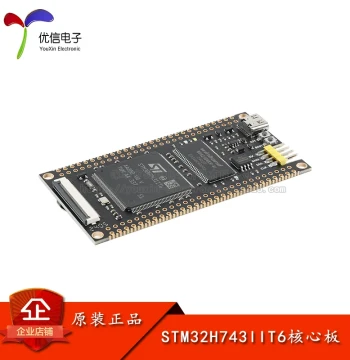
Anonymous
Mar 21, 2026
Rating: 4/5
Solid core board, no frills
Does exactly what it says on the tin. It's a minimal system board, so don't expect extra peripherals like LEDs or buttons beyond the reset button. Quality of the soldering looks good.
Anonymous
Mar 17, 2026
Rating: 5/5
Compact and powerful
The small form factor makes it easy to integrate into custom robot chassis. Flashing firmware via the SWD header was straightforward using an ST-Link V2.
Anonymous
Mar 15, 2026
Rating: 5/5
Perfect for embedded learning
This board is exactly what I needed to start learning ARM Cortex-M4 programming. The pinout is clearly labeled, and it works seamlessly with STM32CubeIDE. Great value for the price.
Anonymous
Mar 13, 2026
Rating: 4/5
Good but requires external debugger
Just a reminder for beginners: this board does not have an onboard programmer. You will need to buy an ST-Link separately to upload your code. Once set up, it runs perfectly.
Anonymous
Mar 01, 2026
Rating: 5/5
Great for university projects
Used this for my final year project involving sensor data logging. The 84MHz speed handles the processing easily, and the 64KB RAM is sufficient for most student applications.
Q: Are the pin headers pre-soldered?
A: Usually, these boards are shipped without headers soldered to allow for flexible mounting options. You will need to solder male or female headers yourself.
Q: Can I power this board with a 9V battery?
A: Yes, you can connect a 9V battery to the VIN pin, as the board includes a voltage regulator to step it down to the required 3.3V for the MCU.
Q: Is this compatible with Arduino IDE?
A: Yes, you can use this board with the Arduino IDE by installing the appropriate STM32 board support packages (via Board Manager).
Q: Does this board come with an onboard programmer?
A: No, this is a minimal core board. You will need an external ST-Link V2 or J-Link debugger to program the chip via the SWD interface.
Q: What is the maximum current this board can supply to peripherals?
A: The onboard regulator can typically supply up to 200mA-300mA depending on the input voltage source, but it is recommended to power high-current devices externally.