Anonymous
Mar 30, 2026
Rating: 5/5
Arduino IDE friendly
As someone transitioning from basic Arduino boards, this was easy to set up in the Arduino IDE. The community support is huge, so finding libraries for sensors was effortless.
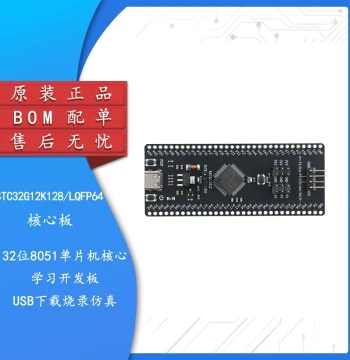
Description
Reviews
| Brand | - |
| Category | Robotics / STEM Teaching Tools / Development, Learning, Evaluation & Industrial Control Boards |
| Origin | - |
| Microcontroller | ESP32-S3-WROOM-1-N8R2 / N16R8 |
| CPU Frequency | Up to 240 MHz |
| Flash Memory | 8MB or 16MB Quad SPI |
| PSRAM | 2MB or 8MB Octal SPI |
| Wireless Connectivity | Wi-Fi 802.11b/g/n (2.4 GHz) and Bluetooth 5 (LE) |
| GPIO Pins | 45 programmable GPIOs |
| Interface Support | USB OTG, SPI, I2C, I2S, UART, PWM, ADC, DAC |
| Operating Voltage | 3.3V logic, 5V USB input |
| Dimensions | 56mm x 27mm x 12mm |
| Development Environment | ESP-IDF, Arduino IDE, MicroPython, CircuitPython |
Anonymous
Mar 30, 2026
Rating: 5/5
Arduino IDE friendly
As someone transitioning from basic Arduino boards, this was easy to set up in the Arduino IDE. The community support is huge, so finding libraries for sensors was effortless.
Anonymous
Mar 12, 2026
Rating: 5/5
Great USB Native Support
Finally, a board with native USB OTG support that works flawlessly as a HID device without needing external converters. The pinout is well documented and easy to use.
Anonymous
Mar 05, 2026
Rating: 5/5
Perfect for AIoT Projects
The ESP32-S3 is a massive upgrade from the older models. The extra PSRAM makes handling image processing and Wi-Fi simultaneous tasks much smoother. Setup with ESP-IDF was seamless.
Anonymous
Mar 04, 2026
Rating: 5/5
Best value dev board
I bought the N16R8 version and have plenty of room for complex firmware. The Bluetooth 5 LE range is impressive compared to previous generations. Highly recommended.
Anonymous
Mar 03, 2026
Rating: 4/5
Solid hardware, minor doc gaps
The hardware quality is top-notch with stable voltage regulation. Some of the specific GPIO strapping options could be better explained in the quick start guide, but the datasheet covers it.
Anonymous
Mar 02, 2026
Rating: 4/5
Powerful but runs warm
Excellent performance for the price. I noticed it gets a bit warm when running Wi-Fi at full power for extended periods, but nothing a small heatsink can't fix. Great for learning.
Q: What is the difference between N8R2 and N16R8?
A: N8R2 indicates 8MB Flash and 2MB PSRAM, while N16R8 indicates 16MB Flash and 8MB PSRAM. Choose N16R8 for projects requiring large file systems or heavy data buffering.
Q: Does it work with MicroPython out of the box?
A: The board comes with factory firmware, but it is fully compatible with MicroPython. You will need to flash the MicroPython binary using esptool.py, which is a straightforward process.
Q: Does this board support external antenna connections?
A: Yes, the ESP32-S3 DevKitC-1 features an IPEX connector for attaching an external antenna to improve wireless range, in addition to the onboard PCB antenna.
Q: Is the PSRAM expandable on this module?
A: No, the PSRAM is integrated into the specific module variant you purchase (either 2MB or 8MB). You cannot physically expand it, so please choose the N16R8 version if you need 8MB.
Q: Can I power this board directly via the VIN pin?
A: It is recommended to power the board via the USB-C port for stable operation. If using VIN, ensure the input voltage is between 5V and 12V, though USB is preferred for development.