Anonymous
Mar 31, 2026
Rating: 4/5
Good pinout layout
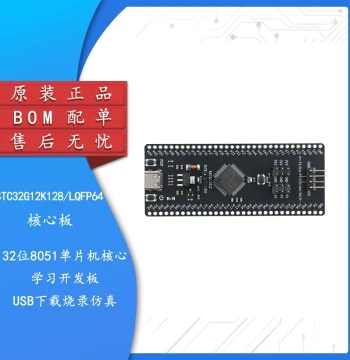
The pinout is logical and easy to breadboard. The Type-C connector is durable. Only minor issue is that the onboard LED is a bit dim, but that's negligible for production use.
Description
Reviews
| Brand | - |
| Category | Robotics / STEM Teaching Tools / Development, Learning, Evaluation & Industrial Control Boards |
| Origin | - |
| Chipset | Realtek RTL8720DN |
| Wireless Standards | Wi-Fi 802.11 a/b/g/n (2.4GHz & 5GHz), Bluetooth 5.0 BLE |
| Interface | USB Type-C for Power and Debugging |
| GPIO Pins | 21 Programmable GPIOs |
| Flash Memory | 4MB External Flash |
| Operating Voltage | 3.3V Logic Level |
| Supported IDEs | Ameba Arduino, RTL8720DN SDK, PlatformIO |
| Antenna | On-board PCB Antenna with External Connector Option |
| Dimensions | 54mm x 26mm x 12mm |
| Application Scope | IoT Prototyping, Smart Home, Industrial Sensors |
Anonymous
Mar 31, 2026
Rating: 4/5
Good pinout layout
The pinout is logical and easy to breadboard. The Type-C connector is durable. Only minor issue is that the onboard LED is a bit dim, but that's negligible for production use.
Anonymous
Mar 29, 2026
Rating: 5/5
Perfect for low-power sensors
I am using this for a battery-powered environmental monitor. The BLE functionality combined with deep sleep modes gives me weeks of runtime. Highly recommended for portable IoT.
Anonymous
Mar 27, 2026
Rating: 5/5
Best board for learning WiFi protocols
As a student, this board gave me great insight into dual-band networking. The community support is growing, and the price point makes it accessible for university projects.
Anonymous
Mar 16, 2026
Rating: 4/5
Great value but docs could be better
Hardware is solid and the Realtek chip is powerful. However, finding specific examples for the 5GHz band took some digging in the forums. Once configured, it runs very stably.
Anonymous
Mar 08, 2026
Rating: 5/5
Excellent dual-band performance
This board works flawlessly with the Arduino IDE. The dual-band WiFi support is a huge plus for avoiding congestion in my smart home projects. Setup was straightforward via the Type-C port.
Anonymous
Mar 03, 2026
Rating: 5/5
Robust connection stability
We deployed ten of these in our workshop for asset tracking. The connection stability on both 2.4G and 5G bands is impressive compared to older ESP modules we used previously.
Q: Can I power this directly from a 5V USB charger?
A: Absolutely. The onboard regulator handles 5V input from the Type-C port and converts it to the required 3.3V for the chip and peripherals.
Q: How do I update the firmware if the boot mode gets stuck?
A: Hold the UART download button while pressing the reset button to enter download mode, then re-flash the firmware using the RTL8720DN burn tool.
Q: Does this board support MQTT out of the box?
A: Yes, the Ameba Arduino library includes robust MQTT client examples that work immediately after installing the board package.
Q: What is the maximum current draw for the GPIO pins?
A: Each GPIO pin can source or sink up to 20mA. Please ensure the total current across all pins does not exceed the chip's absolute maximum ratings.
Q: Is the 5GHz band available in all regions?
A: The hardware supports 5GHz globally, but you must ensure your firmware configuration complies with local wireless regulatory domain settings.