Anonymous
Apr 15, 2026
Rating: 4/5
Great value
Very affordable compared to other development boards. The only downside is the pinout is a bit tight for larger jumper wires, but otherwise excellent.
Description
Reviews
| Brand | - |
| Category | Electronic Components / Maker DIY / Development Boards & Control Boards |
| Origin | - |
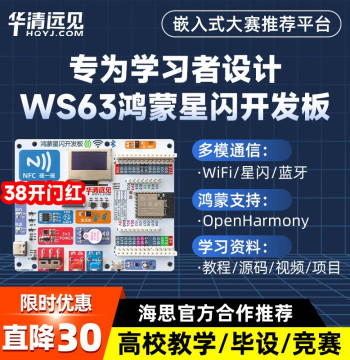
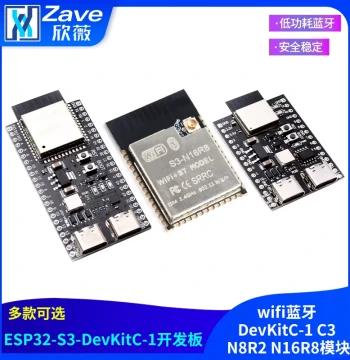
| Processor | ESP32-C3/S3/C6/H2 RISC-V 32-bit |
| Flash Memory | 4MB Octal SPI |
| SRAM | 384KB |
| Wi-Fi Standard | 2.4GHz 802.11 b/g/n |
| Bluetooth Version | Bluetooth 5 (Low Energy) |
| Operating Voltage | 3.3V |
| Input Voltage | 5V via USB Type-C |
| GPIO Pins | 20 Programmable Pins |
| Dimensions | 23 x 17 x 3 mm |
| Weight | 3 grams |
Anonymous
Apr 15, 2026
Rating: 4/5
Great value
Very affordable compared to other development boards. The only downside is the pinout is a bit tight for larger jumper wires, but otherwise excellent.
Anonymous
Apr 03, 2026
Rating: 5/5
Easy to program
Setup was straightforward. Drivers installed automatically on Windows 10. Great for learning embedded systems without breaking the bank.
Anonymous
Feb 15, 2026
Rating: 4/5
Good board
Solid performance for the price. Documentation could be slightly better for beginners, but there are plenty of community resources available.
Anonymous
Feb 05, 2026
Rating: 5/5
Perfect for IoT projects
Works flawlessly with the Arduino IDE. The compact size makes it easy to fit into small enclosures. Wi-Fi connection is stable and Bluetooth pairing was quick.
Anonymous
Jan 25, 2026
Rating: 5/5
Tiny powerhouse
Love the size and performance ratio. I use it for home automation sensors. Battery consumption is low when in deep sleep mode.
Q: What is the power input requirement?
A: You can power the board via the USB Type-C port with 5V. The onboard regulator converts this to 3.3V for the chip.
Q: Is this board compatible with the Arduino IDE?
A: Yes, this board is fully compatible with the Arduino IDE. You will need to install the ESP32 board manager package to get started.
Q: What is the main difference between the C3 and S3 versions?
A: The S3 generally offers more GPIO pins and AI vector instructions, while the C3 is more cost-effective for basic Wi-Fi and BLE tasks.
Q: Does it support an external antenna?
A: This SuperMini version uses an onboard PCB antenna. There is no connector for an external antenna on this specific model.
Q: Which operating systems are supported for programming?
A: You can program this board using Windows, macOS, or Linux. The USB drivers are widely available for all three platforms.