Anonymous
Mar 24, 2026
Rating: 5/5
Perfect for my Arduino night light
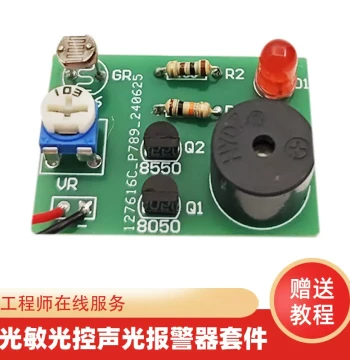
Worked exactly as expected. The potentiometer makes it easy to set the threshold for turning on the LED.

Description
Reviews
| Brand | - |
| Category | Electronic Components / Maker DIY / Computer Hardware, Monitors & Peripherals |
| Origin | - |
| Operating Voltage | 3.3V - 5V DC |
| Output Signal | Digital Switch Output (DO) & Analog Output (AO) |
| Pin Count | 3-Pin or 4-Pin Configuration |
| Comparator Chip | LM393 Voltage Comparator |
| Detection Range | Ambient Light Variations |
| PCB Size | 32mm x 14mm |
| Mounting Hole Diameter | 3mm |
| Indicator LED | Power LED & Output Status LED |
| Sensitivity Adjustment | Blue Potentiometer Trim |
| Microcontroller Compatibility | Arduino, Raspberry Pi, ESP32, STM32 |
Anonymous
Mar 24, 2026
Rating: 5/5
Perfect for my Arduino night light
Worked exactly as expected. The potentiometer makes it easy to set the threshold for turning on the LED.
Anonymous
Mar 19, 2026
Rating: 5/5
Great for school projects
Bought these for a class project on automation. Very responsive to light changes.

Anonymous
Mar 06, 2026
Rating: 5/5
Reliable and cheap
I've used these in multiple prototypes. They hold up well and the soldering points are solid.
Anonymous
Feb 21, 2026
Rating: 4/5
Good sensor, clear instructions needed
The module itself is great quality. Just make sure you check the pinout for your specific board version.
Anonymous
Feb 18, 2026
Rating: 5/5
Sensitive enough for outdoor box
Using this inside a weatherproof box to detect day/night cycles. Works perfectly.
Q: What is the maximum current draw?
A: The module typically draws around 10-20mA depending on the LED indicator status.
Q: Does this provide analog output or just digital?
A: This module provides both. AO gives analog voltage based on light intensity, DO gives a digital high/low signal.
Q: Can I connect this directly to a 5V Raspberry Pi?
A: Yes, but ensure you check the logic levels. It operates on 3.3V-5V, so it is compatible with most Pi GPIO pins.
Q: Is the photoresistor replaceable if it breaks?
A: It is soldered onto the PCB. While technically replaceable with soldering skills, we recommend handling with care.
Q: Does it work with ESP8266?
A: Yes, the ESP8266 operates at 3.3V which is within the operating range of this sensor module.