Anonymous
Mar 18, 2026
Rating: 5/5
Reliable analog output
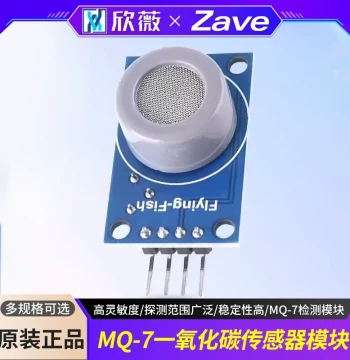
Consistent readings for CO detection experiments. I used the MQ-7 variant specifically and it performed within expected parameters.
Description
Reviews
| Brand | - |
| Category | Electronic Components / Maker DIY / Computer Hardware, Monitors & Peripherals |
| Origin | - |
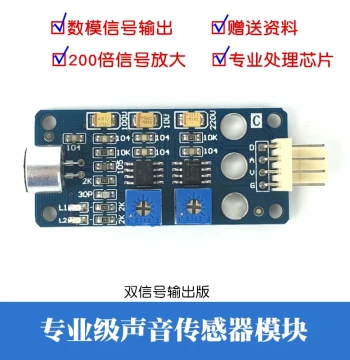
| Sensor Type | Semiconductor Gas Sensor |
| Operating Voltage | 5V DC |
| Output Signal | Analog (AO) and Digital (DO) |
| Heating Voltage | 5.0V ± 0.1V |
| Load Resistance | Adjustable via Potentiometer |
| Heating Resistance | 33Ω ± 5% |
| Heating Current | - |
| Response Time | - |
| Pin Configuration | 4 Pins (VCC, GND, DO, AO) |
| Compatibility | Arduino, Raspberry Pi, ESP32, STM32 |
Anonymous
Mar 18, 2026
Rating: 5/5
Reliable analog output
Consistent readings for CO detection experiments. I used the MQ-7 variant specifically and it performed within expected parameters.
Anonymous
Mar 10, 2026
Rating: 5/5
Perfect for school project
Easy to interface with Raspberry Pi using an ADC. Documentation online is plentiful which helped me get started quickly.
Anonymous
Mar 06, 2026
Rating: 5/5
Great for Arduino projects
Works well for detecting smoke in my prototype. The analog output is stable after the initial warm-up period. Easy to wire up.
Anonymous
Feb 17, 2026
Rating: 4/5
Good sensitivity
Needs calibration but works as expected for LPG detection. The digital threshold potentiometer is very useful for setting alarms.
Anonymous
Jan 30, 2026
Rating: 3/5
Takes time to warm up
Works fine but needs 24-48h initial burn-in for stable readings. Don't expect instant accuracy out of the box.

Q: Can I detect CO2 with the MQ-2 sensor?
A: No, the MQ-2 is sensitive to smoke, LPG, and methane. For air quality and CO2 detection, please select the MQ-135 model.
Q: How long does preheating take before use?
A: For stable and accurate readings, we recommend a burn-in period of 24 to 48 hours upon first use. Subsequent power cycles require less time.
Q: Is this suitable for certified home safety alarms?
A: No, these modules are designed for prototyping and educational purposes. They are not certified for life-safety or industrial safety applications.
Q: What microcontroller is compatible with this module?
A: This module is broadly compatible with Arduino, ESP32, STM32, and Raspberry Pi. You just need to ensure proper voltage regulation.
Q: Does this work with 3.3V logic microcontrollers?
A: Yes, the sensor operates at 5V, but the output signals are compatible. We recommend using a level shifter for the digital output when connecting to 3.3V boards.