Anonymous
Mar 31, 2026
Rating: 5/5
Long-lasting performance
Been using one unit in a pot for three months now without any degradation in performance. Highly recommend for long-term monitoring projects.
Description
Reviews
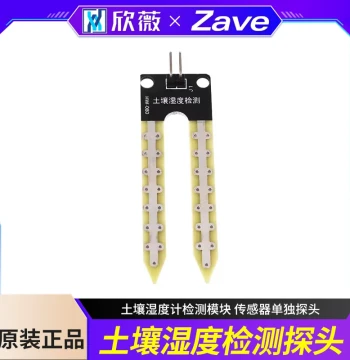
| Brand | - |
| Category | Robotics / STEM Teaching Tools / Sensors |
| Origin | - |
| Sensor Type | Capacitive |
| Output Signal | Analog (0-3.3V) |
| Operating Voltage | 3.3V - 5V DC |
| Interface | 3-Pin Header (VCC, GND, OUT) |
| PCB Coating | Gold-plated Nickel |
| Compatibility | Arduino, Raspberry Pi, ESP32 |
| Dimensions | 62mm x 20mm x 8mm |
| Response Time | < 1 Second |
| Durability | Corrosion Resistant |
| Application | Smart Gardening, Soil Analysis |
Anonymous
Mar 31, 2026
Rating: 5/5
Long-lasting performance
Been using one unit in a pot for three months now without any degradation in performance. Highly recommend for long-term monitoring projects.
Anonymous
Mar 29, 2026
Rating: 4/5
Solid sensor, needs calibration
Good build quality. Remember that you need to calibrate it for your specific soil type to get accurate percentage values, but the raw analog data is solid.
Anonymous
Mar 23, 2026
Rating: 4/5
Great value for prototyping
Works exactly as described. Calibration was straightforward. Only giving 4 stars because the header pins were slightly bent upon arrival, but easy to fix.
Anonymous
Mar 14, 2026
Rating: 5/5
Reliable readings
The signal noise is minimal compared to cheaper alternatives I've tried. Integrating this with an ESP8266 was seamless.
Anonymous
Mar 10, 2026
Rating: 5/5
Much better than resistive sensors
Finally switched from resistive to this capacitive module. No more corrosion after a few weeks in the soil! The analog output is stable and easy to read with my Arduino.
Anonymous
Mar 09, 2026
Rating: 5/5
Perfect for my automated plant system
I bought five of these for my greenhouse project. They are consistent across all units and the gold plating seems very durable against moisture.
Q: What is the maximum cable length I can use to extend the sensor?
A: For analog signals, we recommend keeping extension cables under 1 meter to prevent signal degradation and noise interference. If you need longer distances, consider using a digital sensor variant or signal conditioning.
Q: How often does it need recalibration?
A: Generally, one initial calibration per soil type is sufficient. Unless the physical probe is damaged or heavily coated with mineral deposits, frequent recalibration is not necessary.
Q: Can I connect this directly to a 5V Arduino Uno?
A: Yes, the module operates comfortably within the 3.3V to 5V range. You can connect VCC to 5V, GND to GND, and the OUT pin to any analog input pin on your Arduino Uno.
Q: Is this sensor waterproof or just water-resistant?
A: The probe itself is designed to be inserted into soil and withstand moisture, but the electronic components on the PCB should not be submerged in water. It is suitable for buried use but not underwater operation.
Q: Does this come with example code?
A: The package includes the hardware module only. However, since it outputs a standard analog voltage, many open-source libraries and example sketches for capacitive soil sensors are available online for Arduino and Raspberry Pi.