Anonymous
Mar 30, 2026
Rating: 5/5
Perfect for self-balancing robots
I used this for a two-wheel balancing robot. The response time is fast enough to keep the robot upright without much extra tuning. Highly recommended.
Description
Reviews
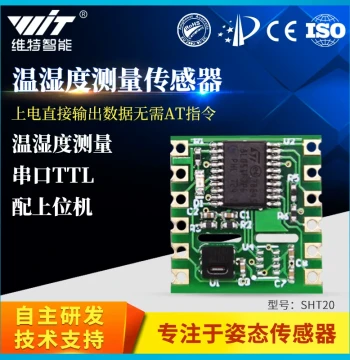
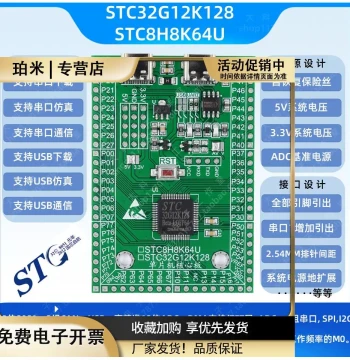
| Brand | - |
| Category | Robotics / STEM Teaching Tools / Sensors |
| Origin | - |
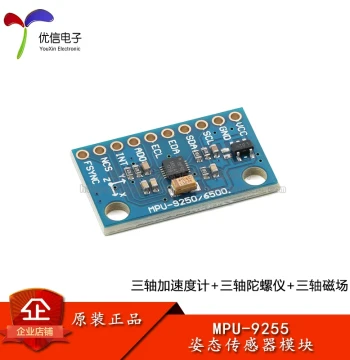
| Chip Model | LIS3DH |
| Communication Interface | I2C / SPI / UART |
| Operating Voltage | 3.3V - 5.0V |
| Measurement Range | ±2g / ±4g / ±8g / ±16g |
| Algorithm | Built-in Kalman Filter |
| Output Data | Roll, Pitch, Yaw Angles |
| Update Rate | Up to 100Hz |
| PCB Dimensions | 22mm x 17mm x 3mm |
| Mounting Holes | 4 x 3mm (M2 compatible) |
| Application Scope | Robotics, Drones, Balance Cars |
Anonymous
Mar 30, 2026
Rating: 5/5
Perfect for self-balancing robots
I used this for a two-wheel balancing robot. The response time is fast enough to keep the robot upright without much extra tuning. Highly recommended.
Anonymous
Mar 23, 2026
Rating: 3/5
Works but requires calibration
Had to spend some time calibrating the offsets to get accurate zero-degree readings. Once calibrated, it performs well. Not plug-and-play for beginners.
Anonymous
Mar 10, 2026
Rating: 5/5
Excellent stability for my quadcopter
The built-in Kalman filter makes a huge difference. The angle data is smooth and stable even with motor vibrations. Easy to integrate with Arduino.
Anonymous
Mar 09, 2026
Rating: 5/5
Reliable I2C communication
No dropouts on the I2C bus during testing. The fusion algorithm inside the chip saves a lot of processing power on my microcontroller.
Anonymous
Mar 01, 2026
Rating: 4/5
Good value but documentation could be better
Sensor works great once you figure out the register settings. The sample code provided is basic, but the hardware quality is solid for the price.
Anonymous
Mar 01, 2026
Rating: 4/5
Solid component for student projects
Bought five for our university lab. Four worked perfectly out of the box; one had a slight drift issue but was manageable with software correction.
Q: Is this compatible with 5V Arduino boards like the Uno?
A: Yes, the module supports 3.3V to 5.0V input voltage, making it fully compatible with 5V logic boards like the Arduino Uno.
Q: What is the maximum update rate for the angle data?
A: The sensor can provide updated angle data at rates up to 100Hz, which is sufficient for most balance and stabilization applications.
Q: Can I change the I2C address if I need to use two sensors?
A: The default I2C address is fixed for this specific breakout configuration. To use multiple sensors, you would typically need to use a multiplexer or utilize the SPI interface for one of them.
Q: Does this module output Euler angles directly or just raw accelerometer data?
A: This module outputs calculated Roll, Pitch, and Yaw angles directly thanks to the onboard Kalman filter algorithm, though raw data access is also possible via registers.
Q: Do I need an external magnetometer for yaw accuracy?
A: For short-term relative yaw changes, the gyro integration works well. However, for absolute heading reference over long periods, an external magnetometer is recommended as this module does not include one.