Anonymous
Mar 30, 2026
Rating: 5/5
Reliable and compact
I bought five of these for a home automation project. All of them worked out of the box. The form factor is small enough to fit into tight enclosures without issues.
Description
Reviews
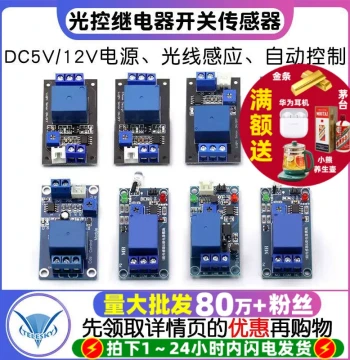
| Brand | - |
| Category | Robotics / STEM Teaching Tools / Sensors |
| Origin | - |
| Operating Voltage | 3.3V - 5V DC |
| Output Signal | Digital Switching Output (0 and 1) |
| Detection Angle | Approx. 60 degrees |
| Comparator Chip | LM393 |
| Sensitivity Adjustment | Potentiometer included |
| PCB Size | 32mm x 14mm x 8mm |
| Mounting Holes | 3mm diameter |
| Response Time | < 10ms |
| Compatible Boards | Arduino, Raspberry Pi, ESP32 |
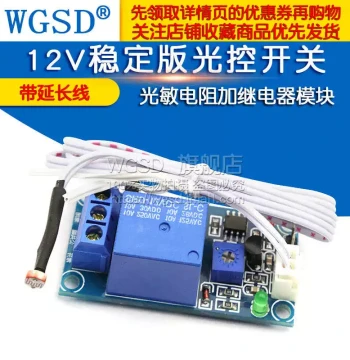
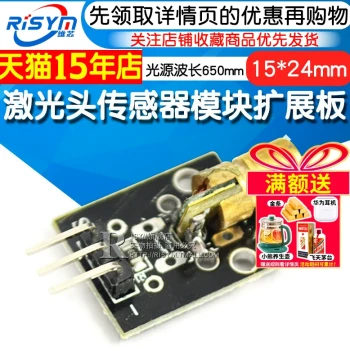
| Package Contents | 1x Photoresistor Module, 1x Header Pin Set |
Anonymous
Mar 30, 2026
Rating: 5/5
Reliable and compact
I bought five of these for a home automation project. All of them worked out of the box. The form factor is small enough to fit into tight enclosures without issues.
Anonymous
Mar 24, 2026
Rating: 5/5
Great for beginners
As someone new to electronics, this was very easy to integrate. The digital output makes it simple to read with basic code. Highly recommend for learning projects.
Anonymous
Mar 19, 2026
Rating: 5/5
Fast shipping and great product
Arrived earlier than expected. The soldering points are clean, and the photoresistor is well-secured. I'm using this for an automatic night light project and it triggers perfectly at dusk.
Anonymous
Mar 11, 2026
Rating: 5/5
Perfect for my light tracking robot
This module works exactly as described. The sensitivity adjustment via the potentiometer is very smooth, allowing me to calibrate it perfectly for indoor lighting conditions. Easy to wire up to my Arduino.
Anonymous
Mar 06, 2026
Rating: 4/5
Solid performance
Does what it says on the tin. The LM393 comparator is stable. Just make sure you don't exceed 5V or you might fry the chip. Works great with 3.3V logic too.
Anonymous
Mar 04, 2026
Rating: 4/5
Good value, clear instructions needed
The sensor itself is high quality and responds quickly to changes in light. I deducted one star because there were no printed instructions included, but I found a tutorial online easily enough.
Q: How do I adjust the sensitivity threshold?
A: There is a blue potentiometer on the board. Turn it clockwise to increase sensitivity (trigger in lower light) or counter-clockwise to decrease it. Use a small screwdriver while monitoring the output LED.
Q: Can this module be used directly with a 3.3V microcontroller like the ESP8266?
A: Yes, this module operates within a 3.3V to 5V range, making it fully compatible with 3.3V logic boards like the ESP8266 and ESP32.
Q: Is the header pin set included in the package?
A: Yes, the package includes a set of male header pins that you can solder onto the module for easy breadboard usage.
Q: What is the maximum current this sensor can switch?
A: The onboard comparator output is designed for signal logic levels, not high-power switching. It should only be connected to a microcontroller GPIO pin. For driving loads, please use a transistor or relay module.
Q: Does this provide an analog output as well?
A: This specific N4B2 model provides a clean digital switching output (High/Low). If you require raw analog voltage readings relative to light intensity, please check our LDR Analog Sensor listing.