Anonymous
Mar 29, 2026
Rating: 5/5
Compact and efficient
Small footprint fits perfectly on my custom PCB. The power LED is bright enough to see status but not annoying. Excellent component for the price point.
Description
Reviews
| Brand | - |
| Category | Robotics / STEM Teaching Tools / Sensors |
| Origin | - |
| Operating Voltage | 3.3V - 5V DC |
| Output Type | Digital Switch (DO) and Analog (AO) |
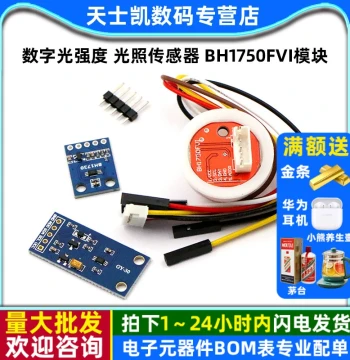
| Pin Configuration | 3-Pin or 4-Pin Compatible |
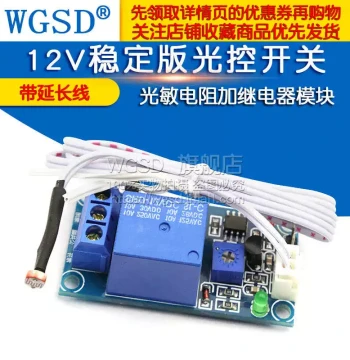
| Detection Component | High Sensitivity Photoresistor |
| Comparator Chip | LM393 Voltage Comparator |
| Sensitivity Adjustment | Blue Potentiometer Included |
| Board Size | 32mm x 14mm x 8mm |
| Mounting Holes | 3mm Diameter for Screws |
| Indicator LED | Power and Output Status LEDs |
| Application Compatibility | Arduino, Raspberry Pi, ESP32 |
Anonymous
Mar 29, 2026
Rating: 5/5
Compact and efficient
Small footprint fits perfectly on my custom PCB. The power LED is bright enough to see status but not annoying. Excellent component for the price point.
Anonymous
Mar 27, 2026
Rating: 4/5
Great value, easy to use
I bought this for a line-following robot prototype that also needs light avoidance. It responds quickly to changes in lighting. Only giving 4 stars because the included header pins were slightly bent, but easily fixed.
Anonymous
Mar 24, 2026
Rating: 4/5
Good sensitivity range
The photoresistor detects even subtle changes in room lighting. I used the analog output to create a dimmer switch logic. Just remember you need to write the code to read the values; it doesn't come with a library.
Anonymous
Mar 18, 2026
Rating: 5/5
Reliable sensor for classroom kits
We ordered twenty of these for our high school electronics club. Every single one worked out of the box. The dual output (analog and digital) makes it versatile for teaching different concepts.
Anonymous
Mar 04, 2026
Rating: 5/5
Perfect for my Arduino sunset lamp
This module works exactly as described. The sensitivity adjustment is very smooth, allowing me to set the exact light threshold needed for my project. Wiring was straightforward with the clear labels on the PCB.
Anonymous
Mar 02, 2026
Rating: 5/5
Works well for outdoor light control
Using this to trigger a relay when it gets dark outside. I put it inside a small waterproof enclosure, and it has been running stable for three weeks. The LM393 chip handles the voltage comparison perfectly.
Q: What is the maximum current this module can handle?
A: This is a sensor module designed for signal detection, not power switching. The output current is limited (typically around 15-20mA). Do not connect motors or high-power LEDs directly to the output pin; use a transistor or relay module instead.
Q: Can I connect this directly to a 5V Raspberry Pi GPIO?
A: While the module operates at 5V, the Raspberry Pi GPIO pins are 3.3V logic. We recommend using a voltage divider or a level shifter for the output pin to ensure safety, though many users report success reading the digital output directly at low risk.
Q: Is the 3-pin version different from the 4-pin version?
A: Functionally they are identical. The 4-pin version breaks out VCC, GND, DO, and AO separately. The 3-pin version usually combines grounds or omits the analog output depending on the specific batch, but our standard listing includes the full 4-pin header compatibility.
Q: Does this module output both analog and digital signals simultaneously?
A: Yes, the module features two output pins: AO for analog voltage output proportional to light intensity, and DO for a digital high/low signal based on your potentiometer threshold.
Q: How do I adjust the sensitivity of the light detection?
A: There is a blue potentiometer on the board. Rotate it clockwise to increase sensitivity (trigger in brighter conditions) or counter-clockwise to decrease it (trigger only in darker conditions). Use a small screwdriver for adjustment.