Anonymous
Mar 29, 2026
Rating: 4/5
Compact and effective
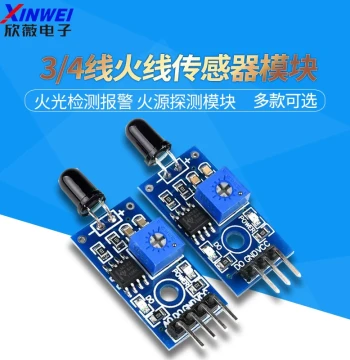
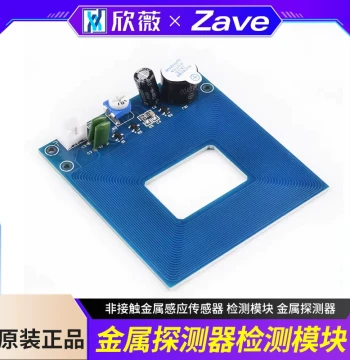
Small footprint makes it easy to integrate into tight spaces. Detection is accurate for ferrous metals. Just wish the connecting wires were a bit longer, but that's a minor issue.
Description
Reviews
| Brand | - |
| Category | Robotics / STEM Teaching Tools / Sensors |
| Origin | - |
| Operating Voltage | 3.3V - 5V DC |
| Detection Range | 0 - 20mm (adjustable) |
| Output Signal | Digital Switch Output (DO) |
| Indicator | Power LED and Detection LED |
| Comparator Chip | LM393 |
| PCB Dimensions | 32mm x 14mm x 8mm |
| Mounting Hole Diameter | 3mm |
| Compatibility | Arduino, STM32, 51 Series, Raspberry Pi |
| Sensitivity Adjustment | Via On-board Potentiometer |
| Response Time | < 2ms |
Anonymous
Mar 29, 2026
Rating: 4/5
Compact and effective
Small footprint makes it easy to integrate into tight spaces. Detection is accurate for ferrous metals. Just wish the connecting wires were a bit longer, but that's a minor issue.
Anonymous
Mar 28, 2026
Rating: 5/5
Perfect for my robotics project
This sensor works flawlessly with my Arduino Uno. The detection range is consistent, and the sensitivity potentiometer makes it easy to tune for specific metal objects. Great value for the price.
Anonymous
Mar 27, 2026
Rating: 5/5
Reliable non-contact detection
We use these in our makerspace for various automation demos. They are robust and handle repeated use well. The non-contact feature is essential for our conveyor belt sorting prototype.
Anonymous
Mar 19, 2026
Rating: 5/5
Excellent sensitivity control
The ability to fine-tune the detection threshold via the onboard pot is a huge plus. I was able to ignore small screws and only detect larger metal plates. Highly recommended for custom projects.
Anonymous
Mar 06, 2026
Rating: 4/5
Good module, needs calibration
Works well once you spend time calibrating the potentiometer. It detected my copper coins easily but struggled slightly with aluminum foil until I adjusted the sensitivity. Solid build quality.
Anonymous
Mar 04, 2026
Rating: 5/5
Great for learning embedded systems
Bought this for a university project involving STM32. The documentation online is plentiful, and the module itself is very responsive. The LEDs provide clear visual feedback during testing.
Q: What is the maximum current consumption of this module?
A: The module typically consumes around 10mA to 15mA when active, which is low enough for most battery-powered applications when managed correctly.
Q: Can I use this to detect metal through a plastic container?
A: Yes, since it is a non-contact induction sensor, it can detect metal objects through non-metallic barriers like plastic, wood, or glass, provided the distance remains within the effective detection range.
Q: Can this sensor detect non-ferrous metals like aluminum or copper?
A: Yes, this induction sensor can detect most metals including non-ferrous ones like aluminum and copper, though the detection range may vary slightly depending on the metal type and size.
Q: Does this come with example code for Arduino?
A: While the physical package does not include a printed manual, we provide a link in the product description to a GitHub repository containing sample code and wiring diagrams for Arduino and other platforms.
Q: Is the output voltage compatible with 3.3V logic levels?
A: Absolutely. The module operates on a wide voltage range (3.3V to 5V), and the digital output is compatible with both 3.3V and 5V microcontrollers like STM32 and Arduino.