Anonymous
Mar 27, 2026
Rating: 4/5
Solid performance
Low power consumption and good signal-to-noise ratio. Just ensure you have proper pull-up resistors on your I2C lines for best results.
Description
Reviews
| Brand | - |
| Category | Robotics / STEM Teaching Tools / Sensors |
| Origin | - |
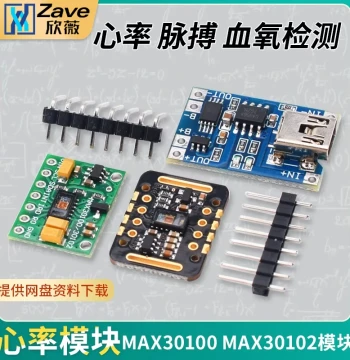
| Model Number | MAX30102 |
| Interface Type | I2C |
| Operating Voltage | 1.8V / 3.3V |
| LED Wavelengths | Red (660nm) and IR (880nm) |
| FIFO Depth | 18 samples |
| Sample Rate Range | 50Hz to 3200Hz |
| Interrupt Output | Yes, configurable |
| Package Type | Module with Breakout Board |
| Compatibility | Arduino, Raspberry Pi, ESP32 |
| Application | Wearable Health Monitoring |
Anonymous
Mar 27, 2026
Rating: 4/5
Solid performance
Low power consumption and good signal-to-noise ratio. Just ensure you have proper pull-up resistors on your I2C lines for best results.
Anonymous
Mar 10, 2026
Rating: 3/5
Works but documentation could be better
The sensor itself functions correctly, but I struggled initially to find clear examples for the advanced FIFO features. Basic usage is straightforward though.
Anonymous
Mar 07, 2026
Rating: 5/5
Perfect for DIY Wearables
This module works flawlessly with my Arduino project. The I2C communication is stable, and the library support is excellent. I was able to get heart rate data within minutes of setup.
Anonymous
Mar 04, 2026
Rating: 4/5
Good sensor, needs calibration
The hardware quality is solid. However, getting accurate SpO2 readings required some tuning of the LED current settings in the code. Once calibrated, it performs very well.
Anonymous
Mar 03, 2026
Rating: 5/5
Reliable data output
I've been testing this against a commercial pulse oximeter, and the trends match up very closely. It's a fantastic component for educational or prototype health devices.
Anonymous
Mar 01, 2026
Rating: 5/5
Great value for money
Compared to other sensors in this category, the MAX30102 offers incredible performance at this price point. The breakout board makes prototyping easy without needing SMD soldering skills.
Q: What libraries are recommended for use with this sensor?
A: For Arduino, the 'SparkFun MAX3010x Pulse and Proximity Sensor Library' is highly recommended. For Python/Raspberry Pi, there are several community-driven libraries available on GitHub.
Q: How far should the sensor be from the skin?
A: The sensor needs to be in direct contact with the skin or very close (within a few millimeters) without pressing too hard, as blood flow restriction can affect readings.
Q: Can this measure blood pressure?
A: No, the MAX30102 is designed to measure heart rate and blood oxygen saturation (SpO2) only. It does not have the capability to measure blood pressure.
Q: Is the LED intensity adjustable?
A: Yes, the LED current is fully programmable via software registers, allowing you to optimize power consumption and signal quality for different skin types.
Q: Does this module work with 5V Arduino boards?
A: Yes, but since the sensor operates at 1.8V or 3.3V, you should use a logic level converter or an I2C breakout board with built-in level shifting to avoid damaging the chip.