Anonymous
Mar 29, 2026
Rating: 5/5
Reliable high-speed interface
Needed a sensor that could keep up with fast polling rates for a data logger. This LM75 module handles the speed without dropping packets.
Description
Reviews
| Brand | - |
| Category | Robotics / STEM Teaching Tools / Sensors |
| Origin | - |
| Sensor Model | LM75AD / LM75BD |
| Interface Type | I2C (Inter-Integrated Circuit) |
| Operating Voltage | 2.7V to 5.5V |
| Temperature Range | -55°C to +125°C |
| Accuracy | ±2°C (typical) from -25°C to +80°C |
| Resolution | 9-bit to 12-bit configurable |
| Conversion Time | Max 150ms at 12-bit resolution |
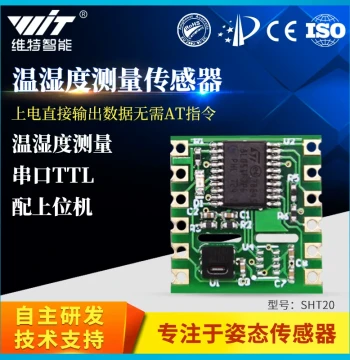
| Package Type | SOIC-8 on Breakout Board |
| Pin Count | 5 Pins (VCC, GND, SDA, SCL, A0) |
| Application | Embedded Systems, HVAC, Industrial Monitoring |
Anonymous
Mar 29, 2026
Rating: 5/5
Reliable high-speed interface
Needed a sensor that could keep up with fast polling rates for a data logger. This LM75 module handles the speed without dropping packets.
Anonymous
Mar 28, 2026
Rating: 5/5
Compact and robust
Great form factor for tight spaces in my enclosure. The soldering points are clear, and the chip seems durable. Highly recommended for prototyping.
Anonymous
Mar 21, 2026
Rating: 5/5
Perfect for Arduino Projects
This module works flawlessly with my Arduino Uno. The I2C communication is stable, and the library support is excellent. Reading temperatures was straightforward.
Anonymous
Mar 21, 2026
Rating: 5/5
Excellent precision for the price
I bought three of these for a multi-zone monitoring system. All three sensors provided consistent readings relative to each other. Very satisfied.
Anonymous
Mar 14, 2026
Rating: 4/5
Good value, accurate readings
Compared the readings against a calibrated thermometer, and it was within 1 degree Celsius. The breakout board makes wiring very easy for beginners.
Anonymous
Mar 05, 2026
Rating: 4/5
Works as expected
No issues setting it up with Raspberry Pi. Just had to enable the I2C interface in the config. Documentation could be slightly better, but plenty of online examples exist.
Q: Is a pull-up resistor required for SDA and SCL lines?
A: Most breakout boards include onboard pull-up resistors. If your specific module does not have them marked, we recommend adding 4.7kΩ resistors to ensure stable I2C communication.
Q: Can I use this outdoors?
A: The sensor chip itself is rated for -55°C to +125°C, but the breakout board is not waterproof. You must place it in a weatherproof enclosure for outdoor use.
Q: How do I increase the temperature resolution?
A: You can configure the resolution from 9 to 12 bits by writing to the Configuration Register via the I2C interface. Higher resolution increases accuracy but also increases conversion time.
Q: What is the default I2C address?
A: The default I2C address is typically 0x48. You can change the last three bits of the address by configuring the A0, A1, and A2 pins if your board exposes them, though this specific breakout usually fixes the address via the A0 pin.
Q: Does this module work with 3.3V logic levels?
A: Yes, the LM75 sensor operates between 2.7V and 5.5V, making it fully compatible with both 3.3V and 5V microcontrollers.