Anonymous
Mar 30, 2026
Rating: 4/5
Good sensitivity, needs calibration
Works well once you calibrate the resistance curve. Great for detecting touch pressure in interactive art installations.
Description
Reviews
| Brand | - |
| Category | Robotics / STEM Teaching Tools / Sensors |
| Origin | - |
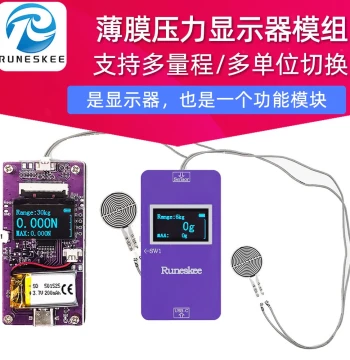
| Model Number | FSR402 |
| Sensor Type | Resistive Thin Film |
| Active Area Diameter | 18.5 mm |
| Force Range | 0.1 N to 100 N |
| Operating Voltage | 3.3V - 5V DC |
| Interface | Analog Output |
| Thickness | < 0.5 mm |
| Response Time | < 10 ms |
| Durability | > 1 Million Cycles |
| Application | Robotics, Touch Interfaces, Weight Sensing |
Anonymous
Mar 30, 2026
Rating: 4/5
Good sensitivity, needs calibration
Works well once you calibrate the resistance curve. Great for detecting touch pressure in interactive art installations.
Anonymous
Mar 29, 2026
Rating: 5/5
Excellent value for money
Compared to other force sensors on the market, the FSR402 offers great performance at a fraction of the cost.
Anonymous
Mar 21, 2026
Rating: 5/5
Reliable and durable
I have been using these in a prototype keyboard for months without any failure. The force sensing is consistent.
Anonymous
Mar 20, 2026
Rating: 4/5
Great for learning electronics
Used this for my university final year project. Documentation online is plentiful which helped a lot during integration.
Anonymous
Mar 07, 2026
Rating: 5/5
Perfect for my robotic hand project
These sensors are incredibly responsive and easy to interface with an Arduino. The thin film design fits perfectly into tight spaces.
Anonymous
Mar 02, 2026
Rating: 5/5
Fast shipping and great product
Arrived quickly and worked straight out of the box. The analog output is smooth and easy to read with an ADC.
Q: What is the maximum temperature this sensor can withstand?
A: The operating temperature range is typically -40°C to +85°C. Please avoid exposing the sensor to temperatures outside this range to prevent damage.
Q: Does the package include a breakout board?
A: This specific listing is for the raw FSR402 sensor element only. Breakout boards are available separately in our store if you need easier connectivity.
Q: How do I connect this to a microcontroller?
A: Connect one lead to ground and the other to an analog input pin through a pull-up resistor (usually 10kΩ) connected to VCC. The voltage at the analog pin will vary with applied force.
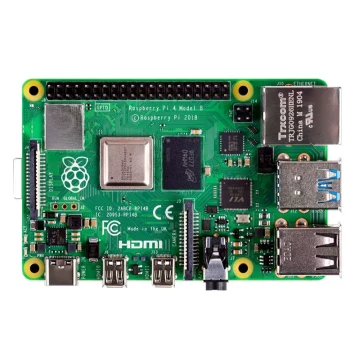
Q: Is this compatible with Raspberry Pi?
A: Since the Raspberry Pi GPIO pins do not have built-in ADCs, you will need an external Analog-to-Digital Converter (like MCP3008) to read the analog output of this sensor.
Q: Can this sensor measure weight accurately for a small scale?
A: Yes, the FSR402 can be used for weighing applications within its 0.1N to 100N range, though it requires calibration against known weights for precision.