Anonymous
Mar 25, 2026
Rating: 5/5
Excellent for learning biosignals
Bought this for a university project. It clearly shows the P-Q-R-S-T waveforms on the serial plotter. Highly recommended for students.
Description
Reviews
| Brand | - |
| Category | Robotics / STEM Teaching Tools / Sensors |
| Origin | - |
| Model Number | AD8232 |
| Operating Voltage | 3.3V - 5V DC |
| Interface Type | Analog Output / SPI |
| Lead Configuration | 2-Lead or 3-Lead Support |
| Signal Gain | 110x (Typical) |
| Common Mode Rejection | >80 dB at 50/60 Hz |
| Board Dimensions | 24mm x 18mm x 4mm |
| Connector Type | Standard 3.5mm Jack or Pin Header |
| Application Range | Fitness, Hobbyist, Prototyping |
| Package Includes | 1x AD8232 Module, 1x Pin Header Strip |
Anonymous
Mar 25, 2026
Rating: 5/5
Excellent for learning biosignals
Bought this for a university project. It clearly shows the P-Q-R-S-T waveforms on the serial plotter. Highly recommended for students.
Anonymous
Mar 15, 2026
Rating: 4/5
Good value, needs careful wiring
The sensor performs well once you get the electrode placement right. Make sure your power supply is stable to avoid noise in the readings.
Anonymous
Mar 05, 2026
Rating: 5/5
Perfect for Arduino Projects
This module works flawlessly with my Arduino Uno. The signal quality is surprisingly clean for the price point. Setup was easy using existing libraries.
Anonymous
Mar 04, 2026
Rating: 5/5
Compact and reliable
Small form factor makes it easy to integrate into wearable prototypes. The LO+ and LO- leads detection feature is very handy.
Anonymous
Mar 04, 2026
Rating: 4/5
Solid performance
Great little board. I wish it came with electrodes included, but the module itself is top-notch for the cost.
Anonymous
Mar 03, 2026
Rating: 3/5
Works but sensitive to movement
The module functions as described, but the signal gets noisy if there is any body movement. Great for stationary testing, less so for active monitoring without extra filtering.
Q: How do I reduce noise in the signal?
A: Ensure good skin contact with electrodes, keep wires short and twisted, use a stable power source, and implement digital filtering in your code.
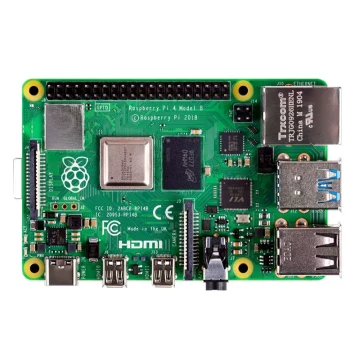
Q: Is this compatible with Raspberry Pi?
A: Yes, it is compatible. Since the output is analog, you will need an external ADC (like MCP3008) to connect it to a Raspberry Pi, or use the PWM technique.
Q: What is the maximum sampling rate supported?
A: The module supports sampling rates suitable for heart rate monitoring, typically up to several hundred Hz depending on your microcontroller's ADC speed.
Q: Does this module come with electrodes and cables?
A: No, this package includes only the AD8232 sensor module and pin headers. Electrodes and lead wires must be purchased separately.
Q: Can this be used for medical diagnosis?
A: No, this product is intended for hobbyist, educational, and fitness prototyping purposes only. It is not certified for medical diagnostic use.