Anonymous
Mar 31, 2026
Rating: 5/5
Reliable for university projects
We used ten of these for our final year robotics project. They handled motor control and sensor integration without any issues. Very stable performance.
Description
Reviews
| Brand | - |
| Category | Robotics / STEM Teaching Tools / Development, Learning, Evaluation & Industrial Control Boards |
| Origin | - |
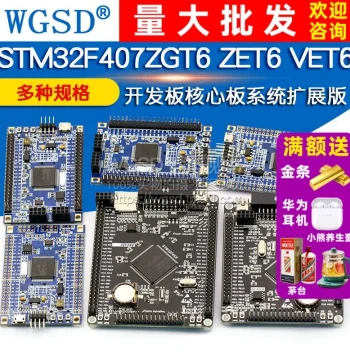
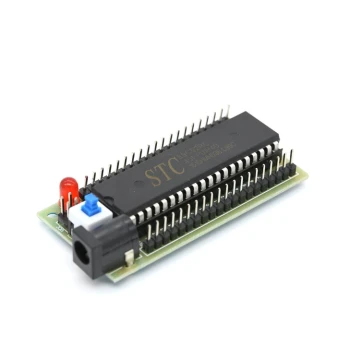
| Microcontroller | STM32F103ZET6 |
| Core Architecture | ARM Cortex-M3 32-bit RISC |
| Main Frequency | 72 MHz |
| Flash Memory | 512 KB |
| SRAM | 64 KB |
| GPIO Pins | 112 Fast I/O Ports |
| Communication Interfaces | 5 USART, 3 SPI, 2 I2C, 2 CAN, 1 USB, 1 Ethernet |
| ADC Resolution | 12-bit, up to 21 channels |
| Power Supply | USB or External 5V/3.3V |
| Board Dimensions | 85mm x 55mm |
Anonymous
Mar 31, 2026
Rating: 5/5
Reliable for university projects
We used ten of these for our final year robotics project. They handled motor control and sensor integration without any issues. Very stable performance.
Anonymous
Mar 25, 2026
Rating: 5/5
Perfect for learning embedded systems
This board is exactly what I needed to start my journey with STM32. The pinout is clearly labeled, and it works flawlessly with Keil and STM32CubeIDE. Highly recommended for students.
Anonymous
Mar 24, 2026
Rating: 4/5
Good starter board
As someone new to ARM development, this board made the transition from Arduino easier than expected. The community support for this specific chip is huge.
Anonymous
Mar 14, 2026
Rating: 5/5
Excellent GPIO availability
Having access to so many GPIO pins on a board this size is fantastic. I was able to interface an LCD, SD card, and multiple sensors simultaneously.
Anonymous
Mar 10, 2026
Rating: 5/5
Robust for prototyping
Used this for rapid prototyping before moving to a custom PCB. The Ethernet and CAN interfaces worked out of the box. No complaints at all.
Anonymous
Mar 10, 2026
Rating: 4/5
Great value but manual could be better
The hardware quality is solid for the price. All peripherals tested working. The only downside is the included documentation is a bit sparse, but there are plenty of online resources.
Q: What debugger interface does this board support?
A: This board supports SWD (Serial Wire Debug) via the onboard ST-Link/V2 interface or external J-Link debuggers.
Q: Is this compatible with the Arduino IDE?
A: While primarily designed for Keil, IAR, and STM32CubeIDE, it can be used with Arduino IDE by installing the appropriate STM32 core packages.
Q: Are example codes provided for the Ethernet module?
A: Yes, we provide a link to a GitHub repository containing basic examples for Ethernet, USB, and other peripherals in the product description.
Q: Does this board come with a USB cable for programming?
A: Yes, the package typically includes a standard USB Mini-B cable for power and SWD programming/debugging.
Q: Can I power this board with a 9V battery?
A: It is recommended to use a 5V supply via USB or the 5V pin. While there is an LDO regulator, inputting 9V directly may cause excessive heat; please check the schematic for voltage limits.