Anonymous
Mar 31, 2026
Rating: 5/5
Excellent replacement for older 8-bit boards
Upgraded from an 8-bit controller and the speed difference is night and day. The 64KB flash is plenty for most intermediate projects. Highly recommended for hobbyists.
Description
Reviews
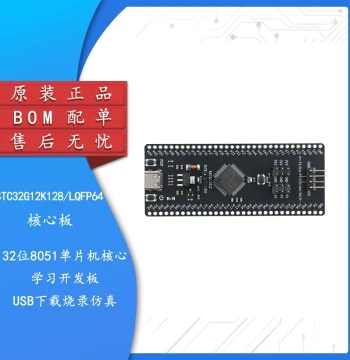
| Brand | - |
| Category | Robotics / STEM Teaching Tools / Development, Learning, Evaluation & Industrial Control Boards |
| Origin | - |
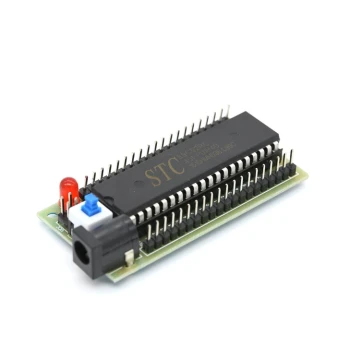
| Core Architecture | ARM Cortex-M0 32-bit |
| Flash Memory | 64 KB |
| SRAM | 8 KB |
| Operating Voltage | 3.3V DC |
| GPIO Pins | Up to 55 I/O ports |
| Debug Interface | SWD / JTAG |
| Clock Speed | Max 48 MHz |
| Package Type | LQFP48 |
| Board Dimensions | 55mm x 28mm |
| Compatibility | Keil, IAR, GCC |
Anonymous
Mar 31, 2026
Rating: 5/5
Excellent replacement for older 8-bit boards
Upgraded from an 8-bit controller and the speed difference is night and day. The 64KB flash is plenty for most intermediate projects. Highly recommended for hobbyists.
Anonymous
Mar 30, 2026
Rating: 5/5
Reliable for industrial prototyping
We purchased ten of these for initial prototyping of a control module. They have been running continuously in our test rig for weeks without any failures. Very reliable.
Anonymous
Mar 26, 2026
Rating: 4/5
Good quality, fast shipping
The PCB quality is high with clean soldering. One minor issue was that the USB cable wasn't included, but that's standard. The board booted up immediately upon connection.
Anonymous
Mar 26, 2026
Rating: 4/5
Solid hardware, documentation could be better
The board itself is robust and the chip performs well at 48MHz. However, finding specific register maps required some digging online. Once set up, it runs stable projects without issues.
Anonymous
Mar 21, 2026
Rating: 5/5
Perfect for learning ARM architecture
This board is exactly what I needed to start my journey with 32-bit microcontrollers. The pinout is clearly labeled, and it works seamlessly with the standard IDEs. Great value for the price.
Anonymous
Mar 05, 2026
Rating: 5/5
Great for university projects
Used this for my final year embedded systems project. It handled all my sensor inputs and PWM outputs perfectly. The SWD debugging interface made troubleshooting very easy.
Q: Is this compatible with the Arduino IDE?
A: While primarily designed for Keil and IAR, it is possible to configure it for the Arduino IDE using specific core packages developed by the community, though it is not plug-and-play like standard Arduino boards.
Q: What is the maximum current draw per GPIO pin?
A: Each GPIO pin can source or sink up to 25mA. Please ensure the total current drawn from all ports does not exceed the microcontroller's total limit specified in the datasheet.
Q: Does it support floating-point operations?
A: The HK32F030 uses a Cortex-M0 core which does not have a hardware Floating Point Unit (FPU). Floating-point math is handled via software libraries, which may be slower than hardware-accelerated solutions.
Q: Does this board come with a built-in USB programmer?
A: No, this specific model requires an external SWD or JTAG debugger/programmer to upload code and debug. It does not have a built-in USB-to-serial converter.
Q: Can I power this board via the 5V pin?
A: Yes, you can supply 5V to the VIN pin, as the board includes an onboard LDO regulator to step it down to the required 3.3V for the MCU. Do not apply 5V directly to the 3.3V pin.