Anonymous
Mar 27, 2026
Rating: 5/5
MicroPython works flawlessly
Flashed MicroPython in seconds. The board boots quickly and the available RAM allows for substantial scripts. Great for rapid development cycles.
Description
Reviews
| Brand | - |
| Category | Robotics / STEM Teaching Tools / Development, Learning, Evaluation & Industrial Control Boards |
| Origin | - |
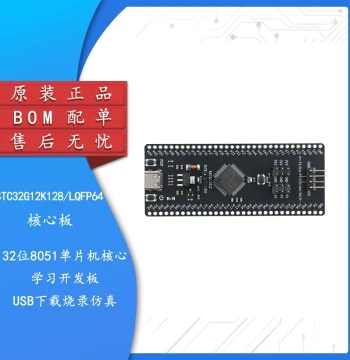
| Processor | ESP32-S3FH4R2 Dual-Core Xtensa LX7 |
| Clock Speed | Up to 240 MHz |
| Flash Memory | 4 MB Octal SPI PSRAM |
| Wireless Connectivity | Wi-Fi 802.11b/g/n and Bluetooth 5 (LE) |
| GPIO Pins | 30+ Programmable GPIOs |
| Interface Support | USB OTG, SPI, I2C, I2S, UART, PWM |
| Operating Voltage | 3.3V Logic Level |
| Input Voltage | 5V via USB-C or VIN pin |
| Dimensions | 20mm x 17mm x 3mm |
| Development Environment | Arduino IDE, ESP-IDF, MicroPython, CircuitPython |
Anonymous
Mar 27, 2026
Rating: 5/5
MicroPython works flawlessly
Flashed MicroPython in seconds. The board boots quickly and the available RAM allows for substantial scripts. Great for rapid development cycles.
Anonymous
Mar 24, 2026
Rating: 4/5
Good value but small pins
Excellent board for the price. My only complaint is that the header pins are quite close together, making it slightly tricky for beginners to solder without a magnifier.
Anonymous
Mar 16, 2026
Rating: 5/5
Replaced my old ESP8266 projects
The upgrade in processing power and memory is noticeable. I can now run more complex logic locally before sending data to the cloud. Highly recommended.
Anonymous
Mar 08, 2026
Rating: 5/5
Great Bluetooth 5 Performance
I needed reliable BLE connectivity for a wearable project, and the S3 chip delivers excellent range and stability. The USB-C port is a nice modern touch.
Anonymous
Mar 06, 2026
Rating: 4/5
Solid board, documentation could be better
Hardware is top-notch and very stable. However, finding specific pinout diagrams for this mini form factor took some digging. Once set up, it works perfectly.
Anonymous
Mar 02, 2026
Rating: 5/5
Perfect for IoT Prototyping
This board is incredibly compact yet powerful. The dual-core processor handles Wi-Fi and sensor data simultaneously without lag. Setup with Arduino IDE was seamless.
Q: Does this board come with pre-soldered headers?
A: No, this module is typically sold without pre-soldered headers to keep the profile low. You will need to solder your own pin headers or connect via breadboard friendly pins if included in your specific kit variant.
Q: Does it support external antenna connection?
A: This specific Mini module uses an onboard PCB antenna. It does not have a connector for an external antenna. For projects requiring extended range, consider the version with an IPEX connector.
Q: Can I power this board directly with a 3.7V LiPo battery?
A: Yes, you can connect a LiPo battery to the BAT pin if the board has a charging circuit, or to the 5V VIN pin through a diode if managing power externally. Please check the specific schematic for your revision to ensure safe voltage levels.
Q: What is the maximum current draw for the GPIO pins?
A: Each GPIO pin can source or sink up to 40mA. However, the total current for all ports combined should not exceed the specified limits in the ESP32-S3 datasheet to avoid damaging the chip.
Q: Is this compatible with the standard ESP32 libraries in Arduino?
A: Mostly yes, but you need to select the 'ESP32S3' board definition in the Arduino Board Manager. Some peripheral configurations differ from the original ESP32, so minor code adjustments might be necessary.