Anonymous
Mar 28, 2026
Rating: 5/5
Perfect for motor control
Used this for a high-speed BLDC motor controller. The FPU handles the math incredibly well, and the thermal performance is stable even under load. Very impressed with the build quality.
Description
Reviews
| Brand | - |
| Category | Robotics / STEM Teaching Tools / Development, Learning, Evaluation & Industrial Control Boards |
| Origin | - |
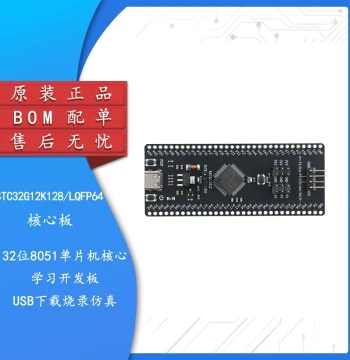
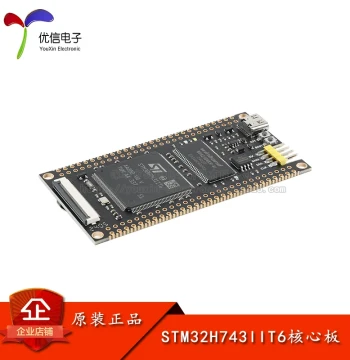
| Microcontroller Model | AT32F435RGT7 |
| Core Architecture | ARM Cortex-M4F |
| Maximum Frequency | 288 MHz |
| Flash Memory | 1024 KB |
| SRAM Capacity | 512 KB |
| Operating Voltage | 3.3V DC |
| I/O Pins | 80+ GPIOs |
| Debug Interface | SWD / JTAG |
| Package Type | LQFP64 |
| Compatibility | Pin-compatible with STM32F103 series |
Anonymous
Mar 28, 2026
Rating: 5/5
Perfect for motor control
Used this for a high-speed BLDC motor controller. The FPU handles the math incredibly well, and the thermal performance is stable even under load. Very impressed with the build quality.
Anonymous
Mar 27, 2026
Rating: 4/5
Solid industrial prototype choice
We used these for prototyping a new control unit. The reliability has been good so far. Only giving 4 stars because the debugger sometimes needs a reset to connect initially.
Anonymous
Mar 25, 2026
Rating: 4/5
Great value, minor documentation gaps
The hardware quality is top-notch and the pinout matches the STM32F103 perfectly. However, finding specific library examples for the AT32F435 took some digging. Once set up, it works flawlessly.
Anonymous
Mar 11, 2026
Rating: 5/5
Excellent performance upgrade
This board runs significantly faster than my old STM32F103 setup. The 288MHz clock speed makes a huge difference for my DSP projects. Highly recommended for anyone looking to upgrade.
Anonymous
Mar 11, 2026
Rating: 5/5
Seamless migration from STM32
Migrating our legacy codebase was surprisingly easy. The peripheral registers are similar enough that most of our HAL drivers worked with minimal tweaks. Great cost-saving alternative.
Anonymous
Mar 05, 2026
Rating: 5/5
Best learning board for advanced users
As a student moving from basic Arduino to professional embedded systems, this board offered the perfect step up. It's affordable yet powerful enough for complex final year projects.
Q: Does this board come with an onboard debugger?
A: No, this is a core/system board and does not include an onboard ST-Link or J-Link debugger. You will need an external debugger probe that supports SWD interface to program and debug the chip.
Q: Does this support floating-point operations?
A: Yes, the AT32F435RGT7 features a hardware Floating Point Unit (FPU) as part of its Cortex-M4F core, making it highly efficient for applications requiring complex mathematical calculations.

Q: What is the maximum current this board can supply on the 3.3V rail?
A: The onboard LDO regulator can typically supply up to 500mA, but we recommend keeping the load under 300mA for optimal stability and thermal performance. For higher currents, please use an external power source.
Q: Can I use existing STM32F103 libraries without modification?
A: Many standard peripheral libraries work directly due to pin compatibility, but register-level addresses may differ slightly. We recommend using the official AT32 CMSIS libraries or checking the migration guide for specific peripheral differences.
Q: Is this board compatible with the standard STM32CubeIDE?
A: Yes, but you will need to install the Artery Tek device support pack (DFP) within the IDE to recognize the AT32F435 chip. Once installed, the workflow is very similar to standard STM32 development.