Anonymous
Mar 25, 2026
Rating: 5/5
Compact and efficient
The small footprint makes it ideal for compact IoT devices. Power consumption is low, which is critical for my battery-powered application.
Description
Reviews
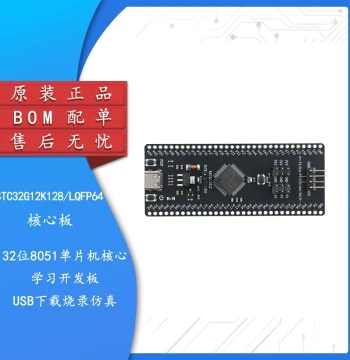
| Brand | - |
| Category | Robotics / STEM Teaching Tools / Development, Learning, Evaluation & Industrial Control Boards |
| Origin | - |
| Chip Model | ADS1015 |
| Resolution | 12-bit |
| Interface | I2C |
| Supply Voltage | 3.3V - 5V |
| Input Channels | 4 Single-ended or 2 Differential |
| Programmable Gain | Yes (x1 to x16) |
| Sampling Rate | Up to 3300 samples per second |
| Operating Temperature | -40°C to +85°C |
| Board Dimensions | 24mm x 16mm |
| Compatibility | Arduino, Raspberry Pi, ESP32 |
Anonymous
Mar 25, 2026
Rating: 5/5
Compact and efficient
The small footprint makes it ideal for compact IoT devices. Power consumption is low, which is critical for my battery-powered application.
Anonymous
Mar 24, 2026
Rating: 5/5
Reliable for data logging
I used this to log battery voltage over a week. The programmable gain amplifier helped get accurate readings even at low voltages. Highly recommended.
Anonymous
Mar 24, 2026
Rating: 5/5
Perfect for sensor projects
This module works flawlessly with my Arduino Uno. The I2C library is easy to use, and the precision is great for reading temperature sensors.
Anonymous
Mar 20, 2026
Rating: 5/5
Great for learning embedded systems
Bought this for a university project. Documentation online is plentiful, and it connected to my Raspberry Pi immediately. Very happy with the purchase.
Anonymous
Mar 10, 2026
Rating: 4/5
Solid component
We bought ten of these for our workshop. Nine worked perfectly out of the box; one had a cold solder joint which was easy to fix. Good quality overall.
Anonymous
Mar 07, 2026
Rating: 4/5
Good value but small pins
The ADC performance is solid for the price. My only complaint is that the header pins are a bit close together, making breadboard insertion slightly tricky without care.
Q: Does this module work with 5V logic levels directly?
A: Yes, the ADS1015 module supports a supply voltage range of 3.3V to 5V, making it compatible with both 3.3V and 5V microcontrollers like Arduino and ESP32.
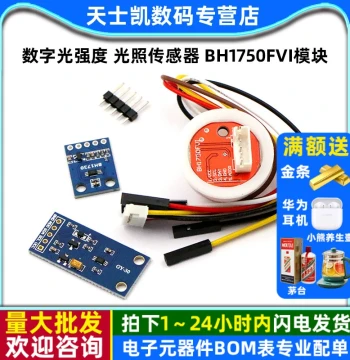
Q: Does this come with header pins soldered?
A: No, the module typically ships with unsoldered header pins to allow for flexible mounting options. You will need to solder them yourself or use jumper wires directly.
Q: What is the maximum input voltage I can measure?
A: The maximum input voltage depends on the gain setting. With the lowest gain (x1), you can measure up to the supply voltage (typically 5V). Higher gains reduce the measurable range but increase precision for smaller signals.
Q: Is a library available for Python on Raspberry Pi?
A: Yes, there are several open-source Python libraries available, such as Adafruit_CircuitPython_ADS1x15, which make interfacing with this module very straightforward on Raspberry Pi.
Q: Can I use all 4 channels simultaneously?
A: You can read from all 4 single-ended channels, but the ADC converts one channel at a time. You must cycle through them in your code to read multiple inputs sequentially.