Anonymous
Apr 02, 2026
Rating: 4/5
Good value but small pins
Great chip performance, but soldering headers requires a steady hand due to the compact pitch. Otherwise excellent.
Description
Reviews
| Brand | - |
| Category | Electronic Components / Maker DIY / Development Boards & Control Boards |
| Origin | - |
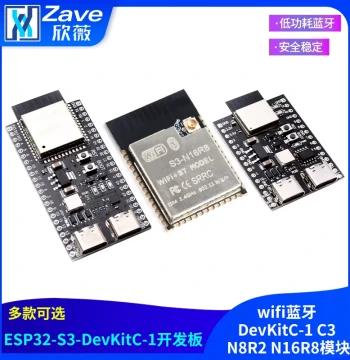
| Microcontroller | ESP32-C3FH4 |
| CPU Core | 32-bit RISC-V |
| Clock Speed | 160 MHz |
| Flash Storage | 4 MB |
| Wireless Connectivity | WiFi 2.4GHz, Bluetooth 5 LE |
| USB Interface | USB Type-C |
| Input Voltage | 5V via USB or 3.3V via Pin |
| GPIO Pins | 22 Programmable GPIOs |
| Dimensions | 53 x 24 x 12 mm |
| Operating Temperature | -40°C to 85°C |
Anonymous
Apr 02, 2026
Rating: 4/5
Good value but small pins
Great chip performance, but soldering headers requires a steady hand due to the compact pitch. Otherwise excellent.
Anonymous
Mar 27, 2026
Rating: 5/5
Stable WiFi Connection
Used for home automation sensors. Has been running for weeks without disconnecting. Very reliable.
Anonymous
Mar 25, 2026
Rating: 4/5
Solid Performance
Bluetooth range is decent for indoor use. Power consumption is low as advertised. Recommended for beginners.
Anonymous
Feb 24, 2026
Rating: 5/5
Easy to Setup
Recognized immediately on Ubuntu without extra drivers. Got the blink example running in minutes.
Anonymous
Feb 17, 2026
Rating: 5/5
Perfect for IoT Projects
Works flawlessly with PlatformIO. The USB-C connection is stable and the WiFi range is impressive for such a small board.
Q: Where can I find the pinout diagram?
A: The full pinout diagram and schematic are available on the product wiki page linked in the description.
Q: Is there an external antenna connector available?
A: No, this model features an onboard PCB antenna. For external antenna options, please check our Pro series.
Q: Does this board support the Arduino IDE?
A: Yes, this board is fully compatible with the Arduino IDE using the ESP32 board manager package.
Q: Can it be powered directly by a LiPo battery?
A: Not directly. You should use a 5V power source or a regulator circuit to ensure stable 3.3V supply to the board.
Q: What is the average power consumption in deep sleep?
A: In deep sleep mode, the consumption is typically around 10-20 microamps depending on peripheral configuration.