Anonymous
Mar 27, 2026
Rating: 5/5
Fast shipping and well packaged
Arrived quickly and was protected well. The module looks sturdy and the pins are properly soldered. Works as described in the datasheet.
Description
Reviews
| Brand | - |
| Category | Electronic Components / Maker DIY / Computer Hardware, Monitors & Peripherals |
| Origin | - |
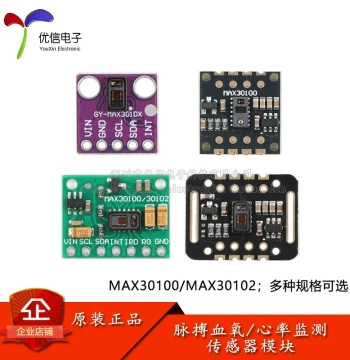
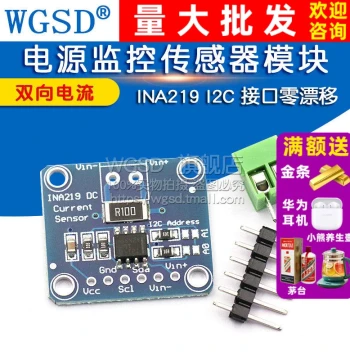
| Interface | I2C |
| Operating Voltage | 3.3V - 5V DC |
| LED Wavelengths | Red 660nm and IR 880nm |
| Compatibility | Arduino, Raspberry Pi, ESP32 |
| Board Dimensions | 20mm x 20mm x 5mm |
| Communication Speed | Up to 400kHz (Fast Mode) |
| FIFO Buffer | 32 Samples |
| Interrupt Output | Yes, Programmable |
| Operating Temperature | -20°C to +70°C |
| Weight | 3 grams |
Anonymous
Mar 27, 2026
Rating: 5/5
Fast shipping and well packaged
Arrived quickly and was protected well. The module looks sturdy and the pins are properly soldered. Works as described in the datasheet.
Anonymous
Mar 21, 2026
Rating: 4/5
Good value but sensitive
The sensor is accurate enough for hobbyist projects. It does require stable contact with the skin to get consistent readings. Movement affects the data significantly.
Anonymous
Mar 09, 2026
Rating: 5/5
Excellent for learning bio-signals
Bought this to learn about photoplethysmography. The I2C communication is stable and the breakout board is well labeled. Highly recommend for students.
Anonymous
Feb 05, 2026
Rating: 3/5
Needs calibration for accuracy
It works, but don't expect medical grade precision. You need to calibrate it against a real device if you want comparable numbers. Good for relative changes though.
Anonymous
Jan 24, 2026
Rating: 5/5
Perfect for Arduino Projects
This module works flawlessly with my Arduino Uno. The library support is excellent and I was able to read heart rate data within minutes. Great for educational purposes.
Q: Are there libraries available for this sensor?
A: Yes, there are several open-source libraries available for Arduino and PlatformIO that support the MAX30102 chip.
Q: What is the wiring configuration for I2C?
A: Connect VCC to 5V, GND to GND, SDA to A4, and SCL to A5 on most Arduino boards. Please refer to the pinout diagram in the description.
Q: Does it work through clothing?
A: No, the sensor requires direct skin contact to detect blood volume changes accurately. Clothing will block the LED signals.
Q: Is this module compatible with 5V logic levels?
A: Yes, the board includes a voltage regulator and level shifting, making it safe for both 3.3V and 5V microcontrollers.
Q: Can I use this for medical diagnosis?
A: No, this product is intended for hobbyist, educational, and development purposes only. It is not certified for medical use.