Anonymous
Mar 25, 2026
Rating: 5/5
Reliable Industrial Sensor
We deployed these on structural beams for monitoring. No drift observed over several weeks of continuous operation. Very satisfied.
Description
Reviews
| Brand | - |
| Category | Electronic Components / Maker DIY / Computer Hardware, Monitors & Peripherals |
| Origin | - |
| Resistance Value | 350 Ohms |
| Gauge Factor | 2.0 ± 1% |
| Operating Temperature | -30°C to +80°C |
| Grid Material | Constantan Foil |
| Bridge Configuration | Full Bridge |
| Grid Dimensions | 3.0 x 3.0 mm |
| Carrier Material | Phenolic Resin |
| Accuracy Class | Class A |
| Lead Wire Length | 1.5 meters |
| Package Quantity | 5 Units |
Anonymous
Mar 25, 2026
Rating: 5/5
Reliable Industrial Sensor
We deployed these on structural beams for monitoring. No drift observed over several weeks of continuous operation. Very satisfied.
Anonymous
Mar 22, 2026
Rating: 5/5
Excellent Value
Much cheaper than competitors with same specs. The quality feels solid and the packaging protected the sensitive components well.
Anonymous
Mar 14, 2026
Rating: 5/5
High Accuracy for Load Cells
Used these for a custom scale project. The output is very stable and consistent across all units. Highly recommended for precision work.
Anonymous
Feb 19, 2026
Rating: 4/5
Good for Educational Use
Great for university labs. Soldering requires care due to the small size, but performance meets expectations for stress analysis tasks.
Anonymous
Jan 25, 2026
Rating: 4/5
Solid Performance
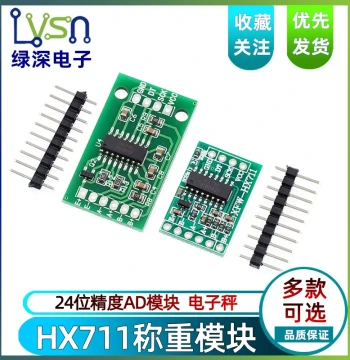
Works well with HX711 module. Packaging was secure. Took off one star because the wires could be a bit more flexible.
Q: Does it work with Arduino boards?
A: Yes, when paired with an appropriate amplifier module like the HX711.
Q: How do I calibrate the system?
A: Use known weights or forces and adjust the gain factor in your software code.
Q: What is the maximum strain limit?
A: Typically rated up to 20000 microstrain for safe operation.
Q: Is this sensor waterproof?
A: No, please apply a protective coating if using in humid or wet environments.
Q: What voltage should I use for excitation?
A: Recommended 5V to 10V DC excitation voltage for optimal performance.