Anonymous
Mar 31, 2026
Rating: 4/5
Solid performance
Does exactly what the description says. The analog output scales nicely with applied weight. Just ensure your power supply is clean to avoid signal jitter.
Description
Reviews
| Brand | - |
| Category | Robotics / STEM Teaching Tools / Sensors |
| Origin | - |
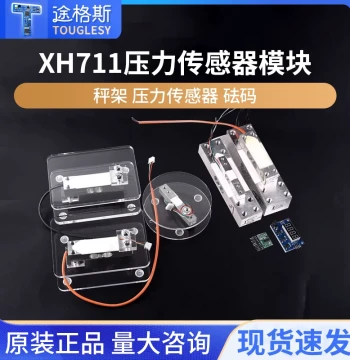
| Measurement Type | Bending Stress and Pressure |
| Sensor Technology | Resistive Strain Gauge |
| Output Signal | Amplified Analog Voltage |
| Operating Voltage | 3.3V to 5V DC |
| Sensitivity Range | Adjustable via Potentiometer |
| Material Composition | Micro Elastic Alloy Substrate |
| Interface Type | Standard 3-Pin Header |
| Dimensions | 20mm x 15mm x 4mm |
| Temperature Range | -20°C to +85°C |
| Application Area | Industrial Monitoring and Robotics |
Anonymous
Mar 31, 2026
Rating: 4/5
Solid performance
Does exactly what the description says. The analog output scales nicely with applied weight. Just ensure your power supply is clean to avoid signal jitter.
Anonymous
Mar 28, 2026
Rating: 5/5
Robust construction
Impressed by the build quality of the micro elastic substrate. It has survived several overload tests in our lab without drifting. Highly recommended for prototype development.
Anonymous
Mar 27, 2026
Rating: 5/5
Excellent precision for hobby robotics
I used this module to build a force-sensing robotic gripper. The amplification is stable, and the output is very linear within the expected range. Setup was straightforward with my Arduino.
Anonymous
Mar 25, 2026
Rating: 4/5
Good value but needs calibration
The sensor works well for measuring bending stress on a test beam. You do need to spend some time calibrating the potentiometer to get the zero-point right, but once set, it holds steady.
Anonymous
Mar 21, 2026
Rating: 5/5
Great for educational projects
Bought this for a university engineering project. It helped us visualize stress distribution clearly. The documentation provided online was also very helpful.
Anonymous
Mar 08, 2026
Rating: 5/5
Perfect for pressure mapping
We integrated four of these into a pressure mat project. The response time is quick, and the noise level is low enough that we didn't need additional filtering circuits.
Q: Does the package include connecting wires?
A: The module comes with soldered header pins. Connecting wires are not included in the standard package but can be purchased separately.
Q: What is the maximum load this sensor can handle before permanent deformation?
A: While specific limits depend on your mounting configuration, the micro elastic substrate is designed to return to its original shape after typical bending stresses. We recommend testing gradually to find the limit for your specific application.
Q: How do I adjust the sensitivity of the output?
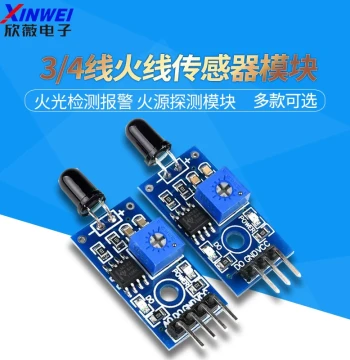
A: There is a small trimmer potentiometer on the board. Rotating it clockwise increases the gain (sensitivity), while counter-clockwise decreases it. Use a multimeter to monitor the output while adjusting.
Q: Is this module compatible with 3.3V microcontrollers like the ESP32?
A: Yes, the module operates comfortably within the 3.3V to 5V DC range, making it fully compatible with ESP32, Arduino, and Raspberry Pi Pico.
Q: Can I use this to measure dynamic impact forces?
A: This sensor is optimized for static and quasi-static measurements like bending stress and steady pressure. For high-frequency dynamic impact, additional signal conditioning may be required.