Anonymous
Mar 31, 2026
Rating: 5/5
Great for Home Automation
Integrated this with my ESP32 home server. The low power consumption and accurate readings make it ideal for monitoring server room temperatures. Very satisfied.
Description
Reviews
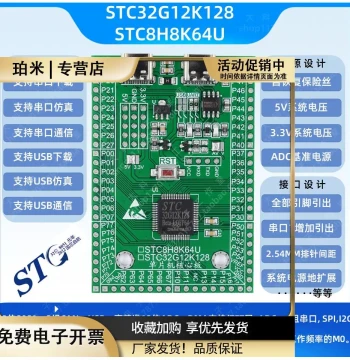
| Brand | - |
| Category | Robotics / STEM Teaching Tools / Sensors |
| Origin | - |
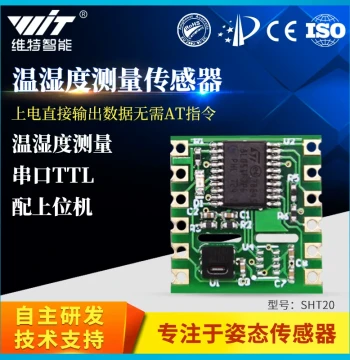
| Sensor Model | LM75BD / LM75AD |
| Interface Type | I2C (Inter-Integrated Circuit) |
| Operating Voltage | 2.7V to 5.5V |
| Temperature Range | -55°C to +125°C |
| Accuracy | ±2°C (typical) |
| Resolution | 9-bit to 12-bit configurable |
| Conversion Time | Max 150ms at 12-bit |
| Package Type | SOIC-8 on Breakout Board |
| Pin Count | 5 Pins (VCC, GND, SDA, SCL, ALERT) |
| Application | Embedded Systems, HVAC, Industrial Monitoring |
Anonymous
Mar 31, 2026
Rating: 5/5
Great for Home Automation
Integrated this with my ESP32 home server. The low power consumption and accurate readings make it ideal for monitoring server room temperatures. Very satisfied.
Anonymous
Mar 29, 2026
Rating: 5/5
Consistent Performance
We ordered ten of these for our student robotics kits. All units worked out of the box with uniform calibration. Excellent value for educational purposes.
Anonymous
Mar 27, 2026
Rating: 4/5
Solid sensor, clear documentation needed
The hardware is excellent, but I had to look up the datasheet online for the register map as the included paper was minimal. Once configured, it reads temperature very quickly.
Anonymous
Mar 26, 2026
Rating: 5/5
Reliable and Compact
Great little sensor board. It fits perfectly into tight spaces in my enclosure. The alert pin feature is very useful for setting over-temperature thresholds without constant polling.
Anonymous
Mar 15, 2026
Rating: 5/5
Perfect for Arduino Projects
This LM75 module works flawlessly with my Arduino Uno. The I2C communication is stable, and the temperature readings are consistent with my calibrated thermometer. Highly recommended for hobbyists.
Anonymous
Mar 11, 2026
Rating: 4/5
Good precision, easy to integrate
Used this for a custom PCB prototype. The high-speed I2C interface performed well up to 400kHz. Only minor issue was the silkscreen labeling being slightly faint, but functionality is top-notch.
Q: What is the default I2C address for this sensor?
A: The default I2C address is 0x48. You can change the address by connecting the A0, A1, and A2 pins to VCC or GND if your specific chip variant supports address selection pins exposed on the board.
Q: How do I configure the resolution of the temperature reading?
A: Resolution is configured via the Configuration Register. You can set it to 9, 10, 11, or 12 bits. Higher resolution increases accuracy but also increases conversion time.
Q: Is the ALERT pin active high or active low?
A: The ALERT pin behavior is configurable in the configuration register. By default, it is often set to active low, but you can program it to be active high depending on your system requirements.
Q: Can this sensor operate at 3.3V logic levels?
A: Absolutely. The LM75 operates from 2.7V to 5.5V, so it is fully compatible with 3.3V microcontrollers like the ESP32 and Raspberry Pi.
Q: Does this module come with pull-up resistors for the I2C lines?
A: Yes, the breakout board includes 4.7kΩ pull-up resistors on both SDA and SCL lines, making it ready to use without external components.