Anonymous
Mar 26, 2026
Rating: 5/5
Durable and flexible
I've bent this sensor around a curved surface on a prosthetic prototype, and it still functions perfectly. The thin profile is a huge plus for tight spaces.
Description
Reviews
| Brand | - |
| Category | Robotics / STEM Teaching Tools / Sensors |
| Origin | - |
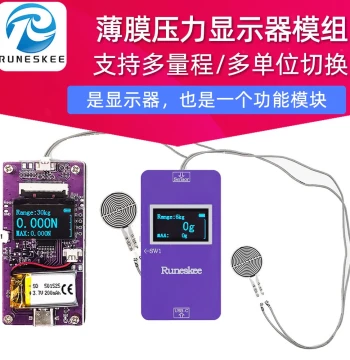
| Sensor Type | Resistive Thin-Film |
| Model Number | FSR402 |
| Active Area Diameter | 18.29 mm (0.72 inches) |
| Force Range | 0 to 100 Newtons |
| Operating Voltage | 3.3V to 5V DC |
| Interface | Analog Output |
| Thickness | < 0.5 mm |
| Material | Flexible Polymer Thick Film |
| Response Time | < 10 microseconds |
| Application | Robotics, HMI, Pressure Mapping |
Anonymous
Mar 26, 2026
Rating: 5/5
Durable and flexible
I've bent this sensor around a curved surface on a prosthetic prototype, and it still functions perfectly. The thin profile is a huge plus for tight spaces.
Anonymous
Mar 25, 2026
Rating: 5/5
Perfect for my robotic gripper project
These sensors are incredibly responsive and easy to integrate with an Arduino. The force curve is smooth, making it simple to calibrate for delicate object handling.
Anonymous
Mar 20, 2026
Rating: 4/5
Great sensitivity, needs calibration
The sensor works well out of the box, but you definitely need to write a calibration routine in your code to get accurate Newton readings. Once calibrated, it's very reliable.
Anonymous
Mar 16, 2026
Rating: 5/5
Excellent for learning haptics
Bought this for a university robotics course. It provides clear analog data that is easy to visualize. Highly recommend for educational purposes.
Anonymous
Mar 11, 2026
Rating: 4/5
Good value for money
For the price, you can't beat the performance. It's not industrial grade for heavy machinery, but for consumer electronics and small robots, it is ideal.
Anonymous
Mar 05, 2026
Rating: 5/5
Fast shipping and great product
Arrived quickly and was packaged well. The sensor detects even light touches, which is exactly what I needed for my touch interface button.
Q: Does the resistance decrease or increase with pressure?
A: The resistance decreases as the force applied to the sensing area increases. This is characteristic of resistive thin-film technology.
Q: Can this sensor be used underwater?
A: No, the FSR402 is not waterproof. Exposure to moisture or liquids can damage the resistive elements. It should be used in dry environments only.
Q: How do I connect this to a breadboard?
A: The module comes with a standard 0.1-inch pitch header. You can simply plug it directly into a solderless breadboard using jumper wires to connect VCC, GND, and Signal.
Q: Is there a library available for Arduino?
A: Yes, there are several open-source libraries available on the Arduino Library Manager and GitHub that help with reading and calibrating FSR sensors, including specific examples for the FSR402.
Q: What microcontroller is compatible with this module?
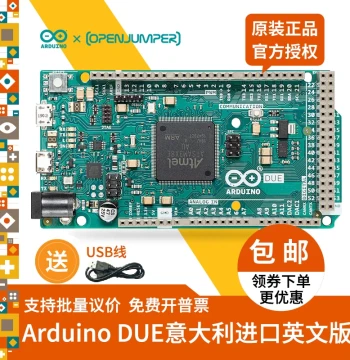
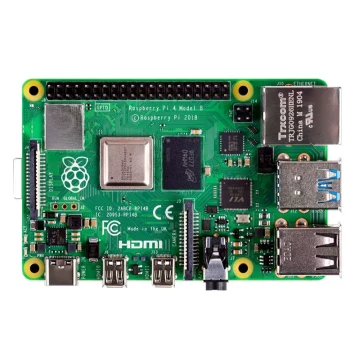
A: Since it outputs an analog voltage, it is compatible with any microcontroller that has an ADC (Analog-to-Digital Converter), such as Arduino, ESP32, STM32, or Raspberry Pi (with an external ADC).