Anonymous
Mar 27, 2026
Rating: 5/5
Reliable I2C communication
Used this in a smart home automation setup to control blinds based on sunlight. The I2C address can be changed via the ADDR pin, which is very helpful when using multiple sensors.
Description
Reviews
| Brand | - |
| Category | Robotics / STEM Teaching Tools / Sensors |
| Origin | - |
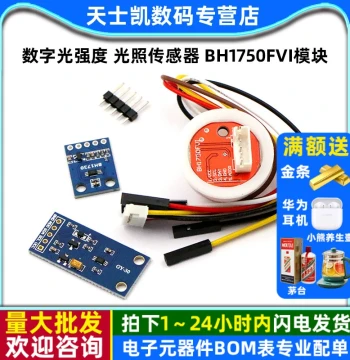
| Sensor Model | BH1750FVI |
| Interface Protocol | I2C |
| Voltage Supply | 3.3V - 5V DC |
| Measurement Range | 1 - 65535 Lux |
| Resolution Modes | High, High2, Low |
| Board Dimensions | 18mm x 14mm |
| Operating Temperature | -40°C to 85°C |
| Response Time | Typically 120ms |
| Pin Count | 5 Pins (VCC, GND, SCL, SDA, ADDR) |
| Application | Arduino, Raspberry Pi, IoT Projects |
Anonymous
Mar 27, 2026
Rating: 5/5
Reliable I2C communication
Used this in a smart home automation setup to control blinds based on sunlight. The I2C address can be changed via the ADDR pin, which is very helpful when using multiple sensors.
Anonymous
Mar 26, 2026
Rating: 5/5
Essential for plant monitoring
I use three of these in my greenhouse to monitor light levels for different plant zones. They have been running outdoors in a weatherproof box for months without issues.
Anonymous
Mar 20, 2026
Rating: 5/5
Great for learning embedded systems
Bought this for my university thesis on energy efficiency. The data sheet is clear, and there are plenty of tutorials online. It provides consistent readings across different light conditions.
Anonymous
Mar 14, 2026
Rating: 3/5
Works but sensitive to noise
The sensor works, but I noticed some fluctuation in readings when placed near a motor. Adding a capacitor helped stabilize it. Just be mindful of your circuit layout.
Anonymous
Mar 13, 2026
Rating: 4/5
Good value, small footprint
Compact module that fits easily into tight enclosures. I deducted one star because the pin headers were not included, so I had to solder them myself. Otherwise, it performs as expected.
Anonymous
Mar 07, 2026
Rating: 5/5
Perfect for Arduino projects
This sensor works flawlessly with my Arduino Uno. The library support is excellent, and reading lux values was straightforward. Great accuracy for indoor lighting tests.
Q: Can this sensor be used directly with a 5V Raspberry Pi GPIO?
A: Yes, the module supports 3.3V to 5V input. However, since Raspberry Pi GPIOs are 3.3V logic, ensure your I2C lines are compatible or use a level shifter if you encounter stability issues.
Q: What is the maximum distance for the I2C connection?
A: Standard I2C protocols recommend keeping cable lengths under 30cm for reliable communication without pull-up resistor adjustments. For longer distances, consider using an I2C extender or buffer.
Q: Does this come with pre-soldered header pins?
A: No, this module is typically shipped without pre-soldered headers to allow flexibility for breadboard use or direct wire soldering. You will need to solder the pins yourself.
Q: Is there a library available for ESP32?
A: Yes, the BH1750 is widely supported. You can find several open-source libraries in the Arduino IDE Library Manager that are fully compatible with the ESP32 platform.
Q: How do I change the I2C address?
A: You can change the I2C address by connecting the ADDR pin to VCC or GND. Refer to the datasheet for the specific address values corresponding to each state.