Anonymous
Mar 31, 2026
Rating: 4/5
Good sensor, careful with wiring
Works well once connected properly. Make sure you have pull-up resistors on the SDA and SCL lines. The humidity data updates quickly.
Description
Reviews
| Brand | - |
| Category | Robotics / STEM Teaching Tools / Sensors |
| Origin | - |
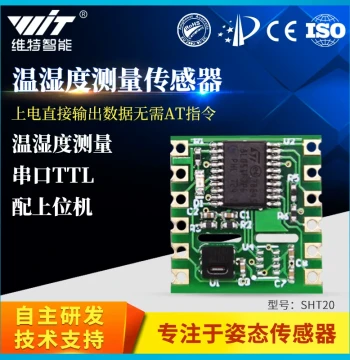
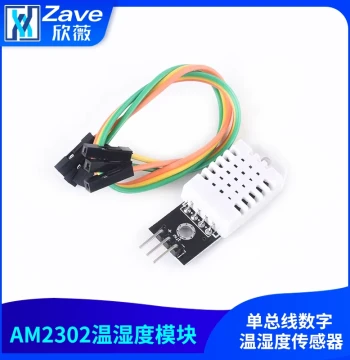
| Model Number | AHT20 |
| Interface Type | I2C Digital Signal |
| Temperature Range | -40°C to +85°C |
| Humidity Range | 0% to 100% RH |
| Accuracy (Humidity) | ±2% RH |
| Accuracy (Temperature) | ±0.3°C |
| Supply Voltage | 2.4V to 5.5V DC |
| Response Time | < 5 Seconds |
| Package Type | SMD Module with Pins |
| Application | IoT, HVAC, Smart Home |
Anonymous
Mar 31, 2026
Rating: 4/5
Good sensor, careful with wiring
Works well once connected properly. Make sure you have pull-up resistors on the SDA and SCL lines. The humidity data updates quickly.
Anonymous
Mar 21, 2026
Rating: 4/5
Great module for beginners
Easy to interface with Arduino. Libraries are readily available. Only wish the pins were pre-soldered, but that's a minor inconvenience.
Anonymous
Mar 13, 2026
Rating: 5/5
Consistent performance
Bought five units for a multi-point monitoring system. All five performed identically right out of the box. Excellent consistency.
Anonymous
Mar 12, 2026
Rating: 5/5
Perfect for my weather station project
The I2C communication was seamless with my ESP32. Readings are stable and match my reference meter closely. Great value for the precision offered.
Anonymous
Mar 09, 2026
Rating: 5/5
Highly accurate and reliable
I tested this against a professional grade sensor and the deviation was negligible. The anti-interference feature seems to work well in noisy environments.
Anonymous
Mar 08, 2026
Rating: 5/5
Essential for automation
Using these in my automated greenhouse setup. They have been running 24/7 for two months without drifting. Very satisfied with the build quality.
Q: What is the default I2C address for this sensor?
A: The default I2C address for the AHT20 is usually 0x38. Please refer to the datasheet for confirmation if you are using a specific batch.
Q: Can this operate at 3.3V logic levels?
A: Absolutely. The AHT20 supports a voltage range of 2.4V to 5.5V, so it is fully compatible with both 3.3V and 5V microcontrollers.
Q: Does this module come with pull-up resistors built-in?
A: Yes, the AHT20 module typically includes onboard pull-up resistors for the I2C lines, making it ready to use without extra components.
Q: Is there a library available for Python?
A: Yes, there are several open-source Python libraries available for Raspberry Pi and other platforms that support the AHT20 via the I2C bus.
Q: How often should I calibrate this sensor?
A: The AHT20 is factory calibrated and generally does not require user calibration under normal operating conditions. It maintains stability over time.