Anonymous
Mar 28, 2026
Rating: 5/5
Perfect for Arduino projects
This sensor module works flawlessly with my Arduino Uno. The library support is excellent, and reading the X, Y, Z axis data was straightforward. Great value for the price.
Description
Reviews
| Brand | - |
| Category | Robotics / STEM Teaching Tools / Sensors |
| Origin | - |
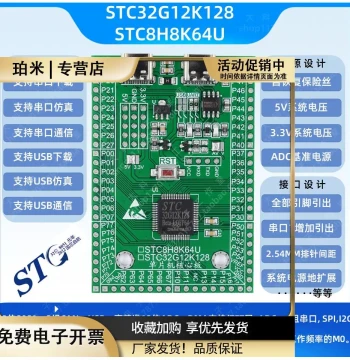
| Model Number | GY-291 (ADXL345) |
| Operating Voltage | 3.3V - 5V |
| Communication Interface | I2C / SPI |
| Measurement Range | ±2g, ±4g, ±8g, ±16g |
| Resolution | 13-bit |
| Output Data Rate | 0.1 Hz to 3200 Hz |
| Power Consumption | 40 µA in measurement mode |
| PCB Dimensions | 22mm x 17mm x 3mm |
| Mounting Holes | 4 x 3mm diameter |
| Application | Tilt sensing, Motion detection, Vibration monitoring |
Anonymous
Mar 28, 2026
Rating: 5/5
Perfect for Arduino projects
This sensor module works flawlessly with my Arduino Uno. The library support is excellent, and reading the X, Y, Z axis data was straightforward. Great value for the price.
Anonymous
Mar 28, 2026
Rating: 4/5
Good accuracy, easy to integrate
Used this for a self-balancing robot prototype. The response time is quick enough for basic stabilization. Just make sure you use the correct voltage level if running on 3.3V logic.
Anonymous
Mar 27, 2026
Rating: 4/5
Solid performance
Works well for tilt angle calculations. Not industrial grade, but perfectly fine for hobbyist drones or camera gimbals where extreme precision isn't critical.
Anonymous
Mar 24, 2026
Rating: 5/5
Reliable I2C communication
No issues with noise on the I2C bus. The breakout board layout is logical, and the soldering pads are large enough for hand soldering without difficulty.
Anonymous
Mar 11, 2026
Rating: 5/5
Great for learning sensors
Bought this for a university physics project. It clearly demonstrates gravity vector changes when tilted. The documentation online is plentiful which helped me get started quickly.
Anonymous
Mar 09, 2026
Rating: 3/5
Good but needs calibration
The sensor works, but it required some software calibration to zero out the offset values. Once calibrated, the readings were consistent. Instructions could be clearer on this step.
Q: Do you provide sample code for ESP32?
A: We do not host code directly, but there are many open-source libraries available on GitHub and the Arduino IDE Library Manager that support the ADXL345 with ESP32.
Q: What is the maximum sampling rate available?
A: The ADXL345 chip on this module supports output data rates up to 3200 Hz, which can be configured via the register settings in your code.
Q: Is there a built-in voltage regulator?
A: The module includes a voltage regulator allowing it to accept input voltages between 3.3V and 5V safely, making it versatile for different microcontrollers.
Q: Can I use this with a Raspberry Pi?
A: Yes, absolutely. Since the module supports I2C communication and operates at 3.3V, it is fully compatible with Raspberry Pi GPIO pins.
Q: Does this module come with header pins pre-soldered?
A: No, the module is shipped without header pins to allow for flexible mounting options. You will need to solder your own headers or wires.