Anonymous
Mar 27, 2026
Rating: 5/5
Perfect for Arduino projects
This module works flawlessly with my Arduino Uno. The library support is excellent, and reading analog values via I2C saved me a lot of GPIO pins. Highly recommended for beginners.
Description
Reviews
| Brand | - |
| Category | Robotics / STEM Teaching Tools / Development, Learning, Evaluation & Industrial Control Boards |
| Origin | - |
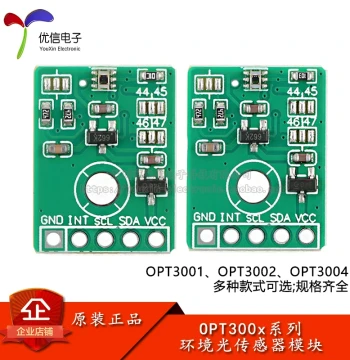
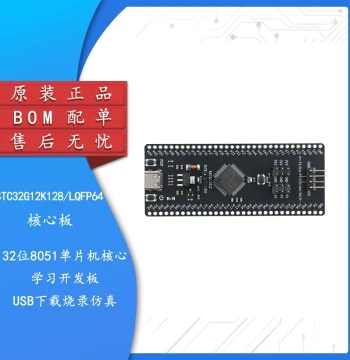
| Chip Model | ADS1015 |
| Resolution | 12-bit |
| Interface | I2C |
| Operating Voltage | 3.3V - 5V |
| Input Channels | 4 Single-ended or 2 Differential |
| Programmable Gain | Yes (x2/3 to x16) |
| Sampling Rate | Up to 3300 samples per second |
| Board Dimensions | 20mm x 15mm |
| Weight | 2.5g |
| Connector Type | 2.54mm Pitch Header |
Anonymous
Mar 27, 2026
Rating: 5/5
Perfect for Arduino projects
This module works flawlessly with my Arduino Uno. The library support is excellent, and reading analog values via I2C saved me a lot of GPIO pins. Highly recommended for beginners.
Anonymous
Mar 25, 2026
Rating: 5/5
Compact and reliable
Small form factor fits perfectly in my custom enclosure. I've been running it for weeks monitoring battery voltage without any drift or issues. Great value for money.
Anonymous
Mar 22, 2026
Rating: 5/5
Essential component
I use these on all my robotics builds now. They are robust and handle the noise in my motor control systems better than the built-in ADC on my microcontroller.
Anonymous
Mar 18, 2026
Rating: 5/5
Great for learning I2C
Bought this for a university project. It helped me understand how to communicate over I2C and handle differential inputs. Documentation online is plentiful.
Anonymous
Mar 15, 2026
Rating: 4/5
Solid performance
Works as advertised. The programmable gain amplifier is very useful when dealing with small sensor signals. Just make sure to pull up the SDA and SCL lines correctly.
Anonymous
Mar 01, 2026
Rating: 4/5
Good precision, easy setup
The 12-bit resolution is sufficient for most of my temperature sensing applications. Setup was straightforward using the Adafruit library. Only wish it had 16-bit resolution like the ADS1115.
Q: What is the maximum input voltage?
A: The analog input voltage should not exceed the supply voltage (VDD). If you power the module with 5V, do not input more than 5V into the analog pins.
Q: Is this compatible with Raspberry Pi?
A: Yes, the ADS1015 is fully compatible with Raspberry Pi via the I2C interface. You will need to enable I2C in the Raspberry Pi configuration settings.
Q: Which library should I use for ESP32?
A: The Adafruit ADS1X15 library is highly recommended and works seamlessly with the ESP32. It is available directly through the Arduino Library Manager.
Q: Does it come with header pins soldered?
A: No, the module typically comes with unsoldered header pins to allow for flexible mounting options. You will need to solder them yourself.
Q: Can I measure negative voltages?
A: Yes, by using the differential input mode, you can measure small negative voltages relative to the other input pin, but the absolute voltage on any pin must stay within GND and VDD.